
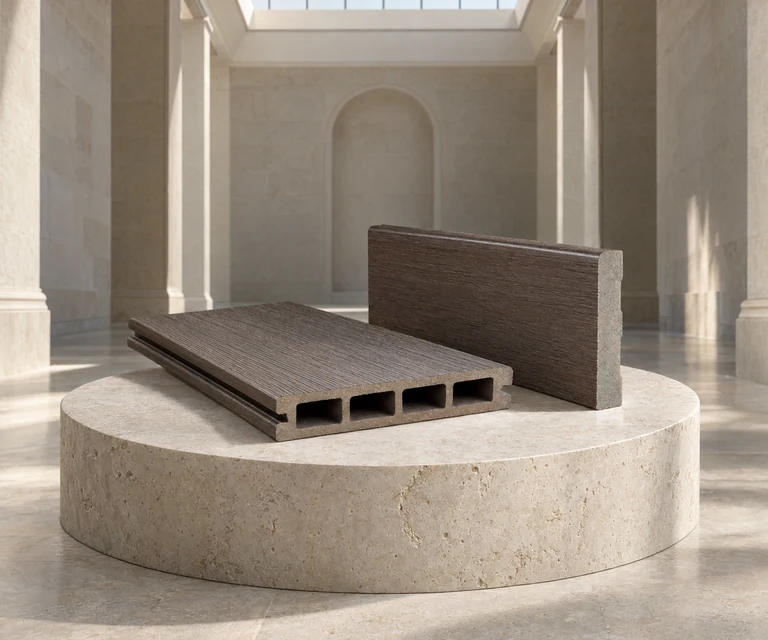
Brand hall
TimberTech
Composite decking since 1997, wood-free polymer beside it — every board filed by line, collection, and written term.
TimberTech · Chicago, Illinois · est. Ohio, 1997A brand of The AZEK Company · James Hardie Industries since 2025 · up to 85% recycled content, per TimberTech
TimberTech began shipping composite deck boards in Ohio in 1997 and now anchors the outdoor-living portfolio of The AZEK Company, part of James Hardie Industries since 2025. This hall keeps the record straight: where the brand came from, what separates a wood-free polymer board from a capped composite one, and how each line's written warranty is structured. The exhibits below decode the label before you weigh a single color sample. Stocked selections at Super Arbor carry the same line names used here.
Wing I
The record
The register, in eight exhibits.
Exhibit 01 — 1997
First boards out of Ohio
Columbus-based Crane Group's plastics operation ships the first TimberTech composite deck boards, placing the brand among the early names in wood-plastic composite decking; within a few years Wilmington, Ohio becomes its manufacturing home — still the address on its warranty documents. The official account today states simply that TimberTech has served homeowners, contractors, and architects for over 25 years.
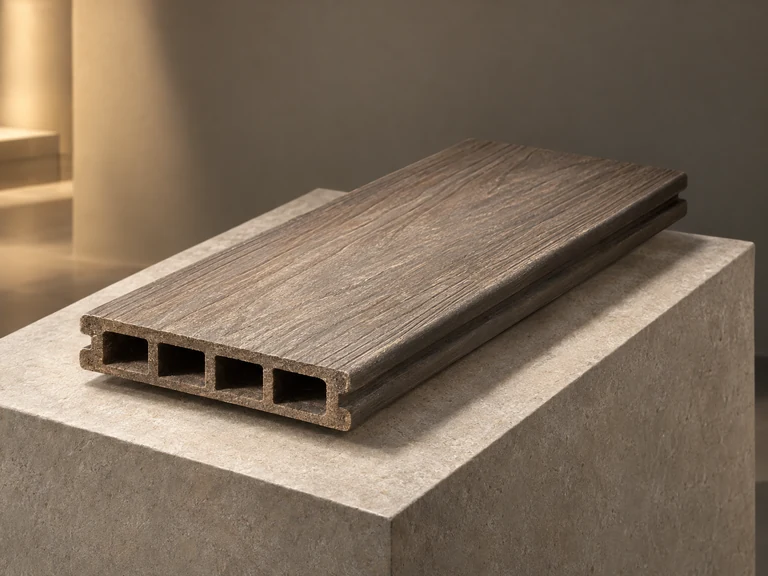
Exhibit 02 — 2012
AZEK's parent buys the brand
CPG International Inc., parent of AZEK Building Products, announces a definitive agreement on August 27, 2012 to acquire TimberTech from Columbus-based Crane Group, with closing expected that September. Premium PVC boards and wood-plastic composite decking come under one roof.
Exhibit 03 — 2018
The AZEK Company
CPG International LLC rebrands as The AZEK Company on January 8, 2018, headquartered in the greater Chicago area, with manufacturing in Scranton, Pennsylvania and Wilmington, Ohio. AZEK and TimberTech are named as its residential building-product brands.
Exhibit 04 — 2020
NYSE: AZEK
The AZEK Company prices its initial public offering on June 11, 2020 — 33,250,000 Class A shares at $23.00 — and begins trading on the New York Stock Exchange under the ticker AZEK the next day. The offering closes June 16 with the underwriters' option exercised in full.
Exhibit 05 — 2020
FULL-CIRCLE recycling
AZEK launches the FULL-CIRCLE PVC Recycling Program with dealers and contractors in November 2020, collecting jobsite PVC scrap for reprocessing into new material. Per the company, it complements the polyethylene recycling already feeding TimberTech's composite decking lines, then sold as PRO and EDGE.
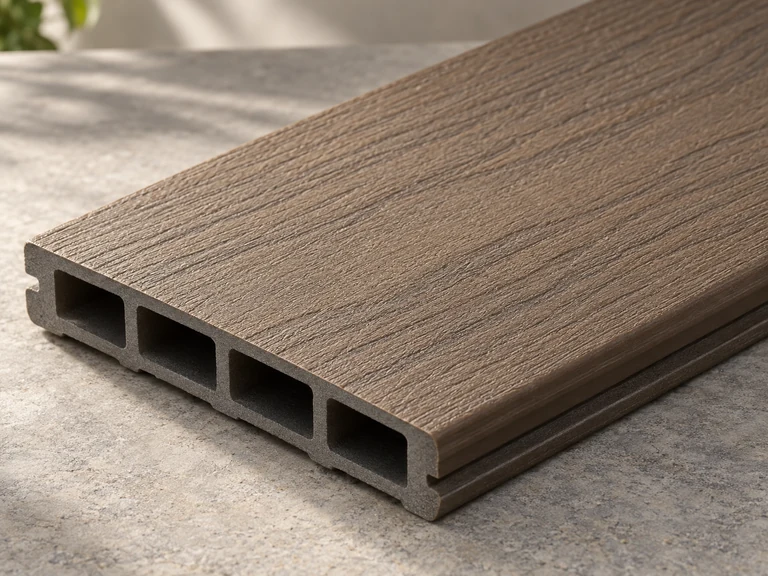
Exhibit 06 — 2023
The warranty ladder, codified
Warranty documents effective this era set the modern ladder in writing: TimberTech Composite collections Legacy, Reserve, and Terrain carry 30-year residential terms, Prime+, Prime, and Premier carry 25-year terms, and Advanced PVC decking carries a Lifetime Limited product warranty with 50-year fade-and-stain coverage.
Exhibit 07 — 2025
Into James Hardie
James Hardie Industries completes its acquisition of The AZEK Company on July 1, 2025 in a cash-and-stock transaction with an implied value of $8.4 billion, and TimberTech joins a brand portfolio alongside Hardie, AZEK Exteriors, and StruXure.
Exhibit 08 — 2026
The brand today
TimberTech remains the decking name in James Hardie's exteriors portfolio, sold in two lines — Advanced PVC and Composite. Product pages cite up to 85% recycled content across decking, and the company states a goal of using one billion pounds of waste and scrap annually.
Interactive exhibit
One board, opened
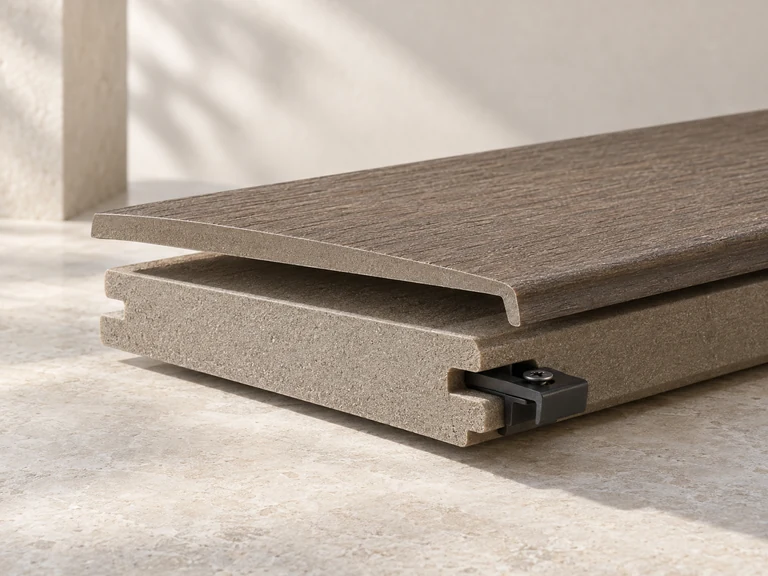
Polymer and composite boards with their fastening, separated into the parts the label names. Open the numbered plates.
- 01
Polymer core — Advanced PVC
Advanced PVC boards are engineered from recycled material with, per TimberTech, zero wood or organic fillers. With no wood flour in the core, there is no organic fill to take on moisture. That is the fact the words Advanced PVC declare on a label — and the basis for the line's Lifetime Limited product warranty.
- 02
Composite core
TimberTech describes its Composite core as a blend of virgin and recycled polymers along with organic material like wood flour — the classic capped-composite recipe. The wood flour is bound in polymer and sealed under the cap; the core itself never shows on the walking surface. Collections from Legacy through Premier ride on this core.
- 03
The protective cap
Advanced PVC boards carry a four-sided protective cap; Composite collections cap three or four sides depending on collection, per TimberTech. The cap is the surface the fade-and-stain warranty is written against: fade is defined measurably as color change beyond 5 Delta E (CIE) units, and stain coverage assumes cleanup within one week of a spill.
- 04
Grooved edge, hidden fastener
Grooved-edge boards take CONCEALoc or FUSIONLoc hidden clips; square-shoulder profiles take top-down fasteners such as Cortex or TOPLoc. TimberTech's guides call for doubled joists at every butt joint and note that gapping, warping, or squeaking traced to other fasteners is not covered by the product warranty.
- 05
Joists and the gap plane
Under the boards, the Composite installation guide holds joists to 16 inches on center maximum, with rows of solid blocking to limit joist twist. Side-to-side gaps run 1/8 to 3/16 inch, with a 3/16-inch minimum wherever boards meet an adjoining structure or post. Movement with temperature is designed in — the substructure keeps it uniform.
Stylized CGI rendering — an illustration of deck-board construction, not a TimberTech drawing.
The lines, explained
Advanced PVC. Legacy. Prime+.
One brand, two chemistries, three warranty terms — the label names all three. The cards keep the ladder straight.
PVC
TimberTech Advanced PVC
The wood-free line: boards engineered from recycled material with zero wood or organic fillers and a four-sided protective cap, per TimberTech. Collections include Vintage, Landmark, Harvest+, Harvest, and Solstice. It carries the top of the warranty ladder — a Lifetime Limited product warranty, with 50-year fade-and-stain coverage on every collection except Solstice, which carries a 35-year fade-and-stain term. Older listings may still show the line's former AZEK name.
FitsPool surrounds, rooftops, and full-sun spans — where moisture and heat argue loudest.
30-YR
TimberTech Composite — Legacy · Reserve · Terrain
Capped composite: a core of virgin and recycled polymers blended with wood flour, sealed under a protective cap, per TimberTech. Legacy, Reserve, and Terrain form the 30-year shelf — 30-year residential product and fade-and-stain limited warranties, prorated in later years per the documents. This is the tier long sold under the TimberTech PRO name.
FitsThe middle of the ladder: composite cost with the longer composite term.
25-YR
TimberTech Composite — Prime+ · Prime · Premier
The entry collections of the Composite line, carrying 25-year residential product and fade-and-stain limited warranties per the official documents. Same chemistry family as the 30-year shelf — polymer-bound wood flour under a cap — with the shorter written term marking the tier. Earlier catalogs sold this shelf as TimberTech EDGE.
FitsFirst composite deck, covered porches, budget-led rebuilds.
Gap rules flip between lines: TimberTech's Composite guide sets butt-joint gaps by install temperature — 3/16 in. at 32°F and below, 1/8 in. mid-range, 1/32 in. at 75°F and above — while the Advanced PVC guide says do not leave a gap at butt joints, splices, or miters. Install by the guide for the line on your invoice, not from memory of the other one.
Read the label
Read the label: line, collection, term
TimberTech files every deck board under a line and a collection, and each pairing maps to one written warranty. The specimen below decodes the way a catalog listing actually reads.
ADVANCED PVC
The line declares the chemistry
Two lines exist. Advanced PVC means a board engineered from recycled material with zero wood or organic fillers and a four-sided cap, per TimberTech. Composite means virgin and recycled polymers blended with wood flour under a three- or four-sided cap. Colors and grain patterns repeat across lines; the line word — not the look — is the material declaration.
VINTAGE
The collection sets the tier
Collections place a board inside its line. Advanced PVC files under Vintage, Landmark, Harvest+, Harvest, and Solstice. Composite splits into two shelves in the warranty documents: Legacy, Reserve, and Terrain on the 30-year shelf; Prime+, Prime, and Premier on the 25-year shelf. Two boards can look near-identical on a rack — the collection name decides the paper behind them.
LIFETIME + 50-YR F&S
The term prices the risk
Advanced PVC decking carries a Lifetime Limited product warranty, with a 50-year fade-and-stain limited warranty on every collection except Solstice, which carries 35 years. Composite carries 30-year or 25-year residential terms, prorated from year eleven onward. Fade is defined measurably — color change beyond 5 Delta E (CIE) units — and claims require proof of purchase, so the term on the label is only as good as the receipt you keep.
Legacy naming persists in the wild: TimberTech AZEK was the former name of the Advanced PVC line, and TimberTech PRO and EDGE were the former composite tiers — some fastener packaging still prints PRO/EDGE.
The desk's read
How the desk checks a decking order
The order logic nobody writes down — voiced as our desk's read, not the brand's claim.
Choose the line before the color
The desk's read: decide by water and sun, not the color card. Decks that stay wet — pool edges, hot-tub platforms, low clearances — or bake unshaded are the case for the wood-free Advanced PVC line. Covered, ventilated, shaded decks are where the Composite tiers earn their keep. Every later decision — collection, fastener, gap rule — hangs off the line, so settle it first.
Price the paper, not just the board
The desk's read: divide shelf price by warranty years before comparing tiers. A 25-year and a 30-year composite board can sit close in price, and the lifetime-plus-50 PVC line resets the math entirely. The paper has mechanics too — terms run from original purchase, prorate from year eleven, and claims require proof of purchase. File the receipt with the house documents.
One line, one guide, one fastener system
The desk's read: the expensive mistake on a TimberTech job is installing one line by the other line's rules. End-gap instructions differ between the Composite and Advanced PVC guides, and both warn that gapping, warping, and squeaking tied to non-TimberTech fasteners sits outside the product warranty. Print the guide for the exact line on the invoice and keep it on site.
First buy: samples, then fasteners, then boards
The desk's read: order samples from one collection per line and judge them outdoors, wet and dry. Then lock the fastening decision — grooved boards commit to CONCEALoc or FUSIONLoc clips, square-shoulder boards to Cortex or TOPLoc screws — because it fixes the board profile you order. Put doubled joists at butt seams on the lumber list from day one.
Torn between PVC and composite? Put the project on a list and let a specialist walk the warranty ladder. Paste the list, however you have it
The working collection
The board bench
The chemistry ladder in four boards — 189 TimberTech and AZEK lines live in the catalog.
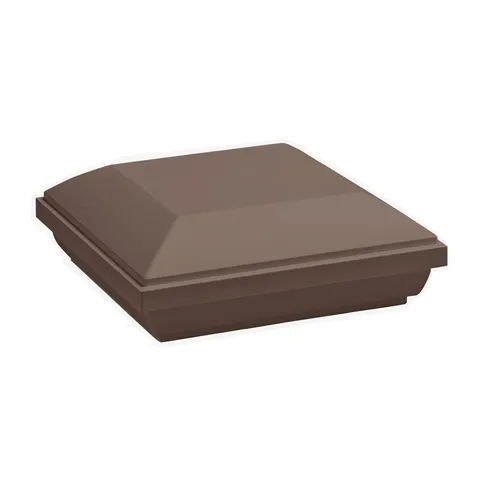
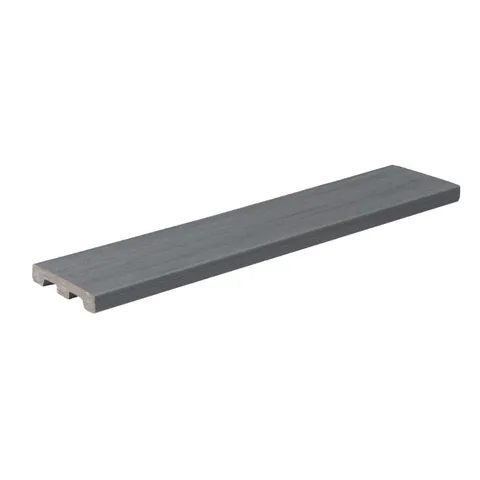
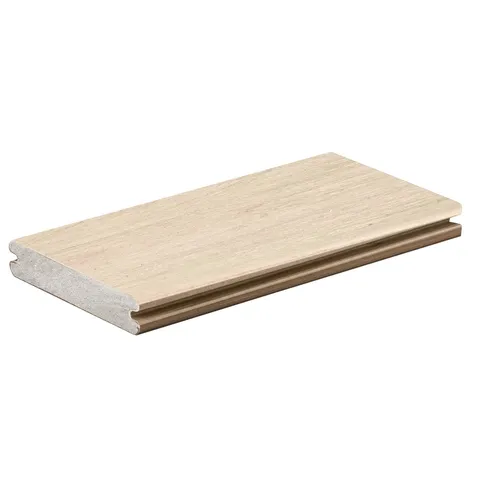
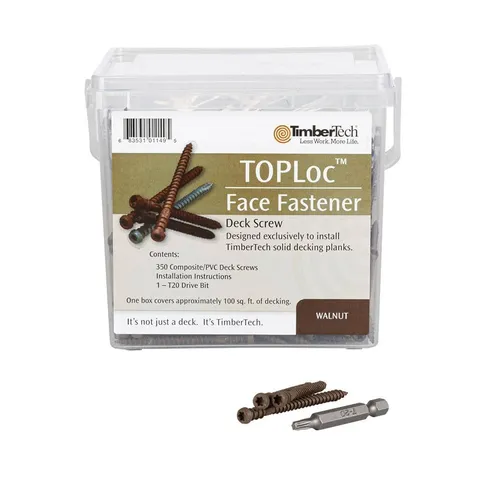
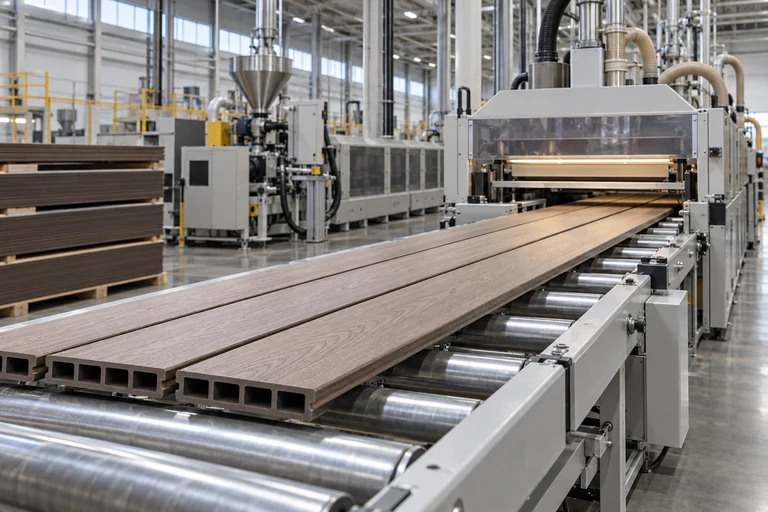
Illustrative production study, not a photograph of the maker's own facility.
Asked at the desk
Questions, answered plainly
Is TimberTech the same as AZEK?
TimberTech is the decking brand of The AZEK Company; the same maker stands behind both names. PVC boards once carried the label TimberTech AZEK, and composite tiers were sold as TimberTech PRO and EDGE. Since July 1, 2025, The AZEK Company has been part of James Hardie Industries. Retail listings may read TimberTech, AZEK, or TimberTech AZEK — they trace to the same manufacturer.
What is the difference between TimberTech Advanced PVC and TimberTech Composite?
Advanced PVC boards are engineered from recycled material with zero wood or organic fillers and a four-sided cap, per TimberTech. Composite boards blend virgin and recycled polymers with wood flour under a three- or four-sided cap. The warranties differ accordingly: a Lifetime Limited product warranty plus 50-year fade-and-stain for Advanced PVC (35-year fade-and-stain on the Solstice collection), versus 30- or 25-year terms for Composite collections.
What warranty does TimberTech decking have?
TimberTech Advanced PVC decking carries a Lifetime Limited product warranty and a 50-Year Fade & Stain limited warranty on the Vintage, Landmark, Harvest+, and Harvest collections; the Solstice collection carries a 35-year fade-and-stain term. Composite decking carries 30-year residential terms on the Legacy, Reserve, and Terrain collections and 25-year terms on Prime+, Prime, and Premier — product and fade-and-stain alike, prorated in later years. Claims run through TimberTech's online form and require proof of purchase.
Is TimberTech decking made from recycled materials?
Yes — TimberTech states its decking contains up to 85% recycled content. Advanced PVC boards are described as engineered from recycled material, and the company's FULL-CIRCLE program collects jobsite PVC scrap for reprocessing into new product. The AZEK Company has stated a goal of using one billion pounds of waste and scrap annually. All figures are the manufacturer's own.
Do TimberTech deck boards need gaps between them?
Yes, and the rules differ by line. The Composite guide calls for 1/8-to-3/16-inch side gaps and butt-joint gaps set by install temperature — 3/16 inch at 32°F and below, down to 1/32 inch at 75°F and above. The Advanced PVC guide calls for 1/8-to-1/4-inch side gaps but tight butt joints with no gap. Always follow the installation guide for your specific line.
Who makes TimberTech decking, and where?
TimberTech decking is made by The AZEK Company — its warranties name AZEK Building Products LLC as manufacturer — headquartered in Chicago and part of James Hardie Industries since July 2025. The brand shipped its first composite boards in 1997 as a Crane Group business in Ohio, and company releases have cited manufacturing in Wilmington, Ohio and in Scranton, Pennsylvania.
The hall closes. The boards stay out past it.
The TimberTech lines above are live catalog — priced in the open, the same number for everyone. Decking is a coverage buy: send the deck plan — however you have it — and a human specialist prices every line and checks the math.
Sources: timbertech.com product, warranty, and about pages · TimberTech installation guides and warranty documents (PDF) · AZEK and James Hardie press releases (PR Newswire, Business Wire, SEC EDGAR) · trade press: Plastics News, Wilmington News Journal Era and anatomy imagery: styled visualizations, not archival photographs or TimberTech drawings.
TimberTech®, AZEK®, Vintage Collection®, and Terrain® are trademarks of The AZEK Company Inc. or its affiliates; CONCEALoc®, FUSIONLoc®, TOPLoc®, Cortex®, and other marks belong to their respective holders. Super Arbor is an independent retailer; brand marks remain the property of their respective owners.