
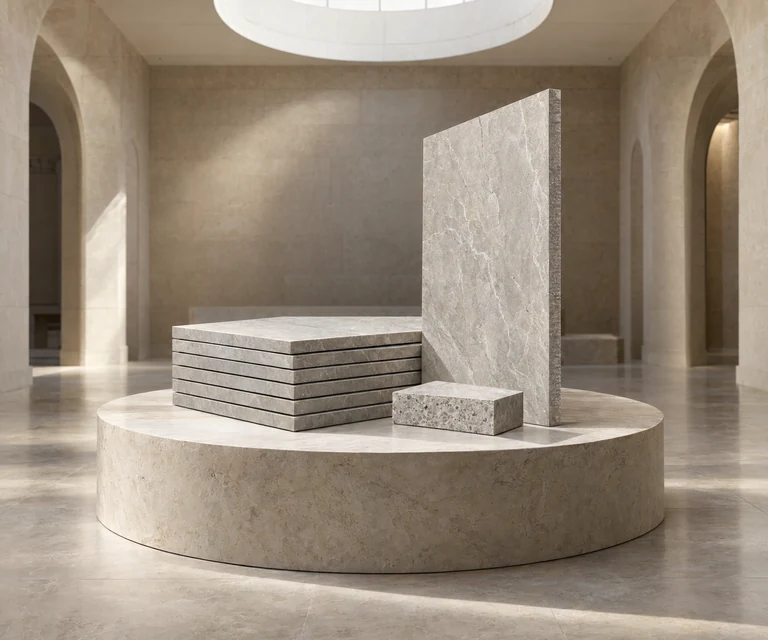
Brand hall
Daltile
Begun in a Dallas Quonset hut in 1947 — porcelain, ceramic, and stone, under Mohawk Industries since 2002.
Daltile · Dallas, Texas · est. Dallas, 1947A Mohawk Industries brand since 2002 · "the best-selling tile brand in America," per Daltile
Daltile began in 1947 as the Dallas Ceramic Company, operating from a Quonset hut in Dallas, Texas. Today it manufactures porcelain and ceramic tile at a dozen North American facilities by its own count, carries natural stone and mosaics, and has operated under Mohawk Industries since 2002. This hall keeps the record — the founding, the American Olean merger, the 2020 click-together porcelain — beside the working knowledge: how a tile spec sheet reads, how a floor assembly stacks, and why the lot number on the carton matters.
Wing I
The record
The register, in eight exhibits.
Exhibit 01 — 1947
A Quonset hut in Dallas
Robert M. Brittingham founds the Dallas Ceramic Company — independent histories credit his brother Juan alongside him — operating out of a Quonset hut in Dallas, Texas. The company that becomes Dal-Tile, and eventually today's Daltile, begins here, pressing and firing ceramic tile under one curved corrugated roof.
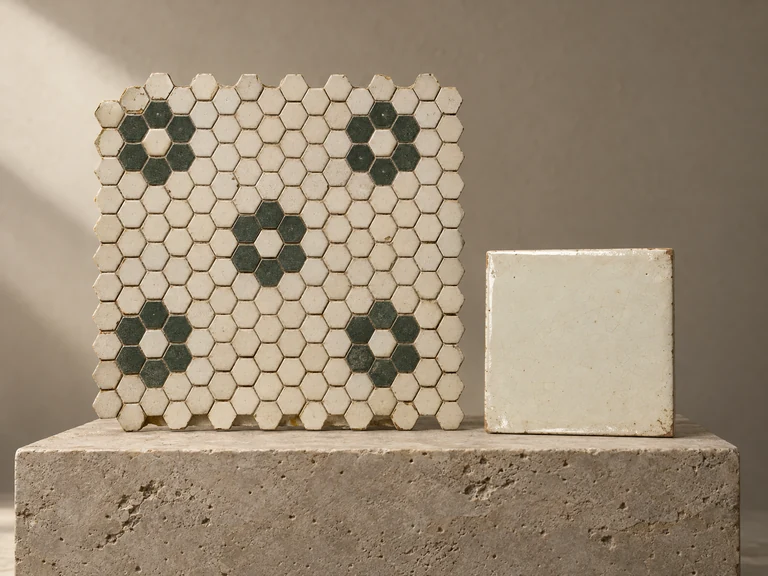
Exhibit 02 — 1955
The first Sales Service Center
The company opens its first Sales Service Center in Tampa, Florida, beginning a company-operated distribution model it still runs. The brand counts over 300 Sales Service Centers across the U.S., Canada, and Puerto Rico today, per its corporate pages.
Exhibit 03 — 1980
Dallas Ceramic becomes Dal-Tile
Dallas Ceramic Company changes its name to Dal-Tile Corporation and purchases Keystone Ridgeway, a manufacturer of unglazed ceramic mosaic tiles. The consumer brand is now written Daltile; corporate filings keep the hyphen — the reason a vendor record may read either way.
Exhibit 04 — 1995
Merger with American Olean
Armstrong World Industries combines its ceramic-tile subsidiary, American Olean Tile Company, with Dal-Tile in a transaction completed December 29, 1995. Armstrong contributes the subsidiary plus $27.6 million in cash in exchange for 37 percent of the combined company, which keeps the Dal-Tile name and its Dallas base.
Exhibit 05 — 1996
Public on the New York Stock Exchange
Dal-Tile International completes an initial public offering in August 1996 and begins trading on the New York Stock Exchange. The public chapter runs nearly six years, closing with the 2002 sale to Mohawk.
Exhibit 06 — 2002
Mohawk Industries
Mohawk Industries completes its acquisition of Dal-Tile International on March 20, 2002, in a cash-and-stock transaction valued at approximately $1.8 billion at closing. Dal-Tile becomes the ceramic side of the flooring manufacturer, the position it holds today.
Exhibit 07 — 2016
Dickson, Tennessee
Dal-Tile begins producing tile at its new Dickson, Tennessee manufacturing facility. The company today counts a dozen manufacturing facilities in North America and states that many collections are designed, developed, and manufactured in the USA.
Exhibit 08 — 2020
RevoTile clicks together
Daltile launches RevoTile: porcelain tile on a ClicFit tongue-and-groove core that floats over many existing floors without thinset, then grouts conventionally. Trade press frames it as an answer to the installer shortage; Daltile describes the system as patented.
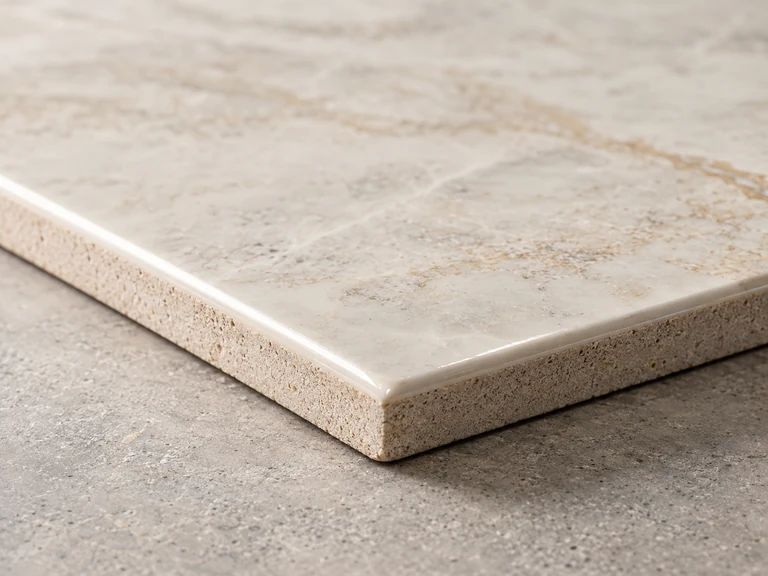
Interactive exhibit
One floor, opened
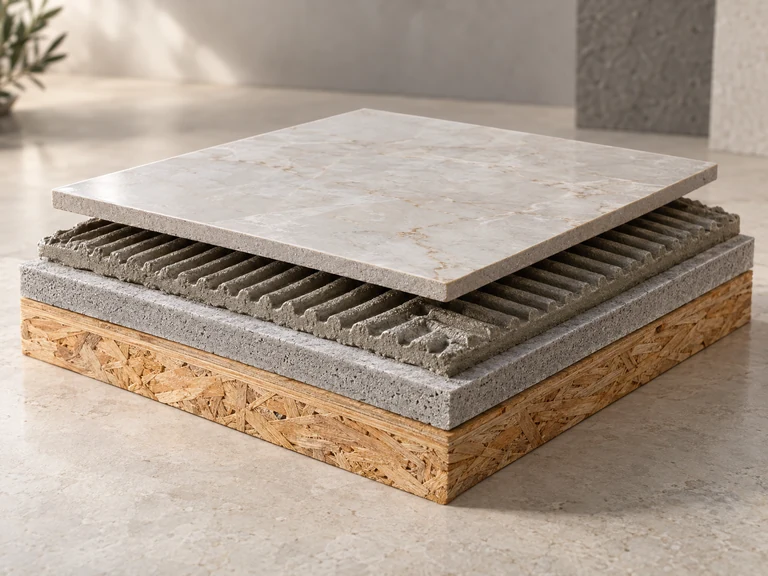
A tiled floor, separated into the stack under the surface. Open the numbered plates.
- 01
The tile
The layer you see is only the top of the assembly. Whether porcelain (water absorption of 0.5 percent or less, per ANSI A137.1) or ceramic, the carton carries the working data: PEI wear class, wet DCOF value, shade-variation rating, and the shade-and-caliber lot number that must match across every box on the job.
- 02
Thinset mortar and trowel ridges
The notched trowel leaves parallel mortar ridges; setting the tile collapses them into a void-free bed. ANSI standards call for at least 80 percent mortar contact in dry areas and 95 percent in wet or exterior ones, with full support under corners. Large-format tile is commonly back-buttered to reach those minimums.
- 03
The membrane
An optional but common sheet or coating between substrate and mortar. Waterproofing membranes (ANSI A118.10) keep water out of the structure below; crack-isolation membranes (ANSI A118.12) keep in-plane substrate cracks — up to 1/8 inch in high-performance versions — from telegraphing through the finished tile above.
- 04
The substrate
Tile is rigid; the floor under it must be too. Industry guidance limits structural deflection to L/360 for ceramic installations and requires a flat plane — flatter still for large-format tile. Concrete, backer board, and properly prepared subfloors qualify; the TCNA Handbook maps which assembly methods suit which substrate.
- 05
The grout joint
Not a gap but a tolerance instrument. ANSI A108.02 sizes the joint at no less than three times the tile's actual facial-dimension variation, and never under 1/16 inch; rectified large-format tile carries a 1/8-inch minimum on average. Movement joints at the perimeter let the whole assembly move without cracking.
Stylized CGI rendering — an illustration of a tile installation stack, not a Daltile drawing.
The bodies, explained
Porcelain. Ceramic. Stone.
Three tile bodies, three jobs — the spec sheet tells them apart before the showroom light does.
≤0.5%
Porcelain
Fired dense enough that water absorption stays at or below 0.5 percent per ANSI A137.1, porcelain is Daltile's floor-first body: harder-wearing, resistant to freeze-thaw where lines carry an exterior rating, and the platform for the brand's StepWise slip-resistant surface. Color-body and glazed versions run from wood looks to marble looks; certified lines carry the Porcelain Tile Certification Agency mark.
FitsFloors, wet rooms, high traffic; check each line's exterior rating.
PEI-rated
Ceramic
The broader, more absorbent clay body — easier to cut, and the traditional choice for walls. On floors, ceramic is governed by the PEI class on its spec sheet: Class 3 covers residential rooms; Classes 0–2 stay on walls and light-duty spaces. Daltile's glazed ceramic lines publish the same wear, slip, and shade-variation data as its porcelain; the body, not the look, is the difference.
FitsWalls, backsplashes, and floors matched to their PEI class.
Stone
Natural stone & mosaics
Quarried rather than fired: marble, travertine, granite, slate, and mosaic formats, a category Daltile has carried since unveiling its Natural Stone Collection in 1999. No two pieces repeat — variation here is geology rather than a V-rating — and most stone is porous, so sealing per the line's care instructions is standard practice. Mosaics arrive mesh-mounted for pattern work and accents.
FitsFeature walls, floors, and accents where variation is the point.
Shade and caliber shift between production runs. Check the V-rating — V1 uniform through V4 random — and buy the entire job plus spares from a single lot in one order; the desk quotes 10–15 percent overage for cuts, breakage, and future repairs. A top-up carton from a different lot shows only after it is grouted in.
Read the spec sheet
Reading a tile spec sheet
Three figures on the carton decide where a tile can live. The specimen below is a level interior floor line, read left to right.
PEI 4
Wear class — the Porcelain Enamel Institute abrasion rating
A surface-abrasion scale from Class 0 to Class 5. Class 0–1 belongs on walls only; Class 2 handles light residential floors such as baths and bedrooms; Class 3 covers all residential rooms; Class 4 adds medium commercial traffic — restaurants, lobbies, offices; Class 5 is heavy commercial. It measures glaze wear, not slip or strength. Most homes are well served at Class 3 or 4.
DCOF ≥ 0.42
Wet slip resistance — the ANSI A326.3 threshold
Dynamic coefficient of friction, measured wet under ANSI A326.3, the tile industry's slip-resistance test. Hard flooring for level interior spaces expected to be walked on when wet must measure 0.42 or greater. Daltile states its StepWise porcelain is built to at least 0.60. The caveat published with the standard: DCOF compares surfaces; it does not predict whether a slip will occur, and no tile is slip-proof.
ABS ≤ 0.5%
Water absorption — the porcelain threshold
Under ANSI A137.1, a ceramic tile qualifies as porcelain only if it absorbs 0.5 percent water or less, tested per ASTM C373. That density is what porcelain's frost resistance and wet-area standing rest on. The Porcelain Tile Certification Agency independently verifies the figure; its mark on a carton means the body was tested, not merely named porcelain.
Figures above are the published industry thresholds. Each Daltile line prints its own tested values — confirm the spec sheet, not the series name.
The desk's read
How the desk checks a tile order
The order logic nobody writes down — voiced as our desk's read, not the brand's claim.
Match the class to the room, not the aisle
The desk's read: buy floors by PEI class and wet rooms by DCOF, and let looks come third. Class 3 carries nearly any house; a shower or mudroom floor should meet the wet 0.42 line, and Daltile's StepWise range exists for exactly that shopper. Wall tile needs neither — spend the wear budget where feet actually land.
The lot-number math
The desk's read: the expensive mistake in tile is not price per square foot — it is the short order. A top-up carton from a different shade lot reads as a patch forever. Order the whole job plus overage, the desk quotes 10–15 percent, in one purchase, and shelve the spares; they are the only perfect repair you will ever own.
Budget the whole stack
The desk's read: a tile budget that stops at tile is unfinished. Mortar matched to the format, membrane where the wet area or substrate calls for one, grout, trim, spacers, and sealer all ride the same ticket. Price the assembly before committing, and size the trowel from the mortar maker's coverage tables, not from memory.
First buy: one carton, your light
The desk's read: order a sample or a single carton before the pallet. Judge the V-rating against your tolerance for variation under the room's actual light, check the sheet's PEI and DCOF against the room's job, and note the lot number for the full order. For anything outdoors, defer to the line's own exterior rating and local code.
Measured the floor but not sure about lots and overage? Put it on a list and let a specialist run the math. Paste the list, however you have it
The working collection
The wall bench
Glazed ceramic for the vertical
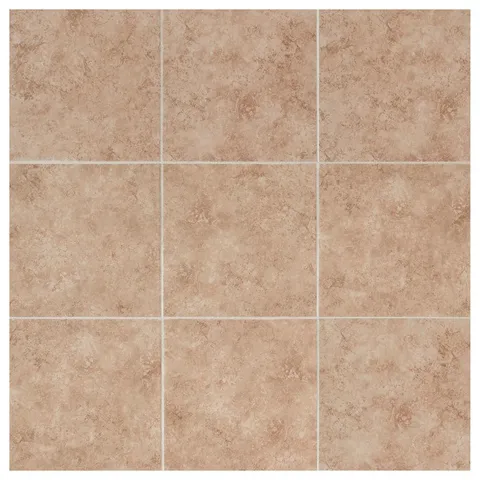
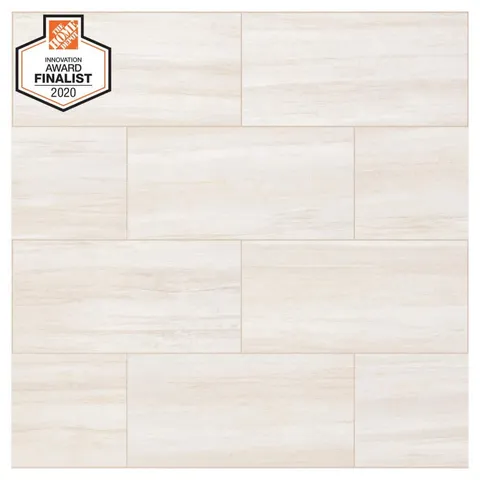
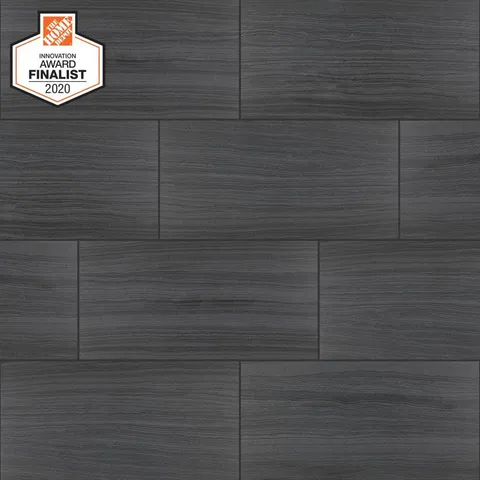
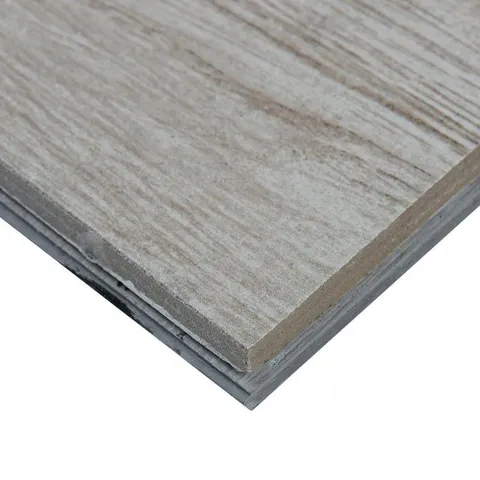

Illustrative production study, not a photograph of the maker's own facility.
Asked at the desk
Questions, answered plainly
Is Daltile tile porcelain or ceramic?
Both, plus natural stone and mosaics. The technical difference is water absorption: under ANSI A137.1, porcelain must absorb 0.5 percent water or less, tested per ASTM C373; ceramic bodies absorb more. Each Daltile spec sheet states which body a line is, along with its tested wear and slip ratings.
What does the PEI rating on tile mean?
PEI is a 0–5 surface-wear scale from the Porcelain Enamel Institute abrasion test. Class 0–1 tile is for walls only, Class 2 suits light residential floors, Class 3 all residential, Class 4 residential plus medium commercial, and Class 5 heavy commercial traffic. It measures glaze wear — not slip resistance or strength.
What DCOF rating does a bathroom floor need?
The tile-industry threshold is a wet DCOF of 0.42 or greater, measured under ANSI A326.3, for level interior floors expected to be walked on when wet. Daltile states its StepWise porcelain measures at least 0.60. The standard itself cautions that DCOF compares products and that no tile is slip-proof.
Who owns Daltile?
Mohawk Industries. Mohawk completed its acquisition of Dal-Tile International on March 20, 2002, in a cash-and-stock transaction valued at approximately $1.8 billion, and Daltile has operated as Mohawk's ceramic business since. The brand remains headquartered in Dallas, Texas, where it was founded in 1947.
Can Daltile porcelain tile be used outdoors?
Many porcelain lines can. Porcelain's water absorption of 0.5 percent or less is what gives it resistance to freeze-thaw damage, but exterior suitability is stated line by line on Daltile's spec sheets, including slip data for surfaces walked on wet. Verify the individual product's exterior rating and local code before ordering.
What is Daltile RevoTile?
A porcelain tile launched in 2020 with a ClicFit tongue-and-groove core that lets the floor float over many existing surfaces without thinset mortar; joints are still grouted. Daltile requires its RapidPrep underlayment and RapidGrout for the warranty. Per trade press, it was Daltile's response to the tile-installer shortage. Daltile's RevoTile pages now redirect to its interlocking vinyl line and retailers list many RevoTile SKUs as discontinued, so confirm current availability before planning around it.
The hall closes. The glaze keeps the shine.
The Daltile lines above are live catalog — priced in the open, the same number for everyone. Tile is a lot-and-overage buy: send the measurements — however you have them — and a human specialist prices every line and checks the math.
Citations: daltile.com (company history, about, StepWise, RevoTile, DCOF industry-standards pages) · Mohawk Industries investor releases and SEC filings · TCNA / ANSI A137.1, A326.3, and A108-series documentation · Porcelain Tile Certification Agency · tile-trade press (Floor Covering News, TileLetter, Stone World). Era and anatomy imagery: styled visualizations, not archival photographs or Daltile drawings.
Daltile®, StepWise™, RevoTile™, and ClicFit™ are trademarks of Dal-Tile Corporation or its affiliates, a Mohawk Industries company. DCOF AcuTest® is a registered mark of the Tile Council of North America. Super Arbor is an independent retailer; brand marks remain the property of their respective owners.