
Brand hall
MAPEI
Adhesives, mortars and grouts from a company founded in 1937 on the outskirts of Milan — family-run for three generations.
MAPEI · Deerfield Beach, FL · est. Milan, 1937Squinzi family-owned, three generations · 106 plants · 59 countries
MAPEI began in 1937 on the outskirts of Milan, where Rodolfo Squinzi and seven workers made auxiliary materials for building — the words behind the acronym. Three generations later the company remains in Squinzi hands, and its Americas headquarters in Deerfield Beach, Florida anchors the U.S. line of thinset mortars, grouts, self-levelers and waterproofing. This hall documents that record and teaches the part most bags never explain: what the ANSI designations on a mortar sack actually certify.
Wing I
The record
The register, in eight exhibits.
Exhibit 01 — 1937
A workshop outside Milan
On February 12, 1937, Rodolfo Squinzi founded MAPEI on the outskirts of Milan with seven employees and the support of his wife Elsa. The name is an acronym: Materiali Ausiliari Per l'Edilizia e l'Industria — auxiliary materials for building and industry.
Exhibit 02 — 1976
An Olympic track in Montreal
MAPEI entered the Canadian market by supplying products for the installation of the running track at Montreal's Olympic Stadium — by the company's own account its first work in North America, two years before it operated a plant on the continent.
Exhibit 03 — 1978
First plant outside Italy
Internationalization began in Laval, Quebec, where MAPEI Inc. opened the group's first plant outside Italy, producing adhesives for tile and resilient flooring. The brand's telling counts the founding staff at one chemist and two quality-control specialists.
Exhibit 04 — 1983
MAPEI Corporation, United States
MAPEI established its United States company in 1983; the brand's own page for the era is titled 'Construction Solutions Since 1983.' U.S. manufacturing and distribution grew from that base.
Exhibit 05 — 1984
The chemist takes over
After Rodolfo's death, his son Giorgio Squinzi — an industrial chemist — took the reins, leading MAPEI from 1984 to 2019. Under his tenure the group pursued internationalization and research, growing from a Milan firm into a multinational.
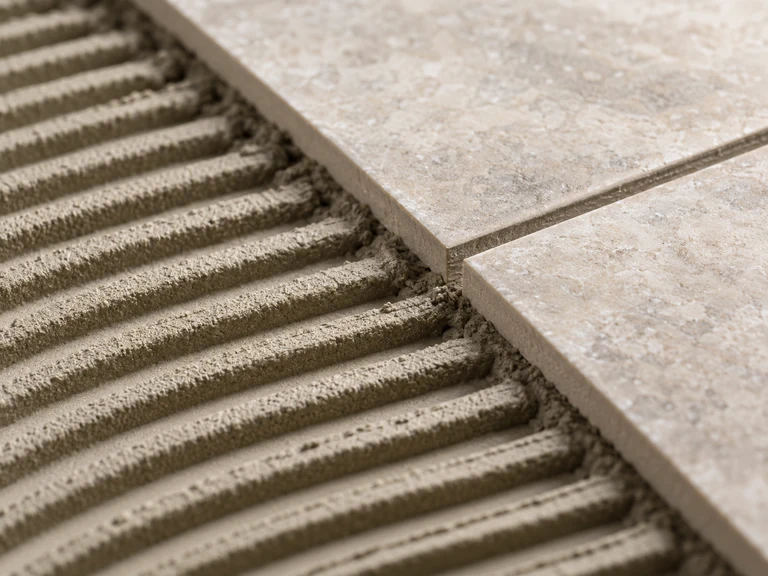
Exhibit 06 — 2000
Americas headquarters, Deerfield Beach
MAPEI relocated its North American headquarters to Deerfield Beach, Florida, centralizing management of the continent's operations. The address — 1144 East Newport Center Drive — still prints on the legal plate of MAPEI's U.S. technical data sheets.
Exhibit 07 — 2019
Third generation
Leadership passed within the family: Laura Squinzi became chair of the board of directors, with Veronica and Marco Squinzi — Giorgio's children — as Group CEOs. Ownership remains with the Squinzi family, as it has since 1937.
Exhibit 08 — 2024
The group today
Per MAPEI's 2024 results, the group closed the year with €4.4 billion in consolidated turnover, 98 subsidiaries in 59 countries, more than 13,000 employees and over 100 production plants — each plant, the company notes, with its own quality-control laboratory.
Interactive exhibit
One installation, opened
A tile installation, separated into the system under the tile. Open the numbered plates.
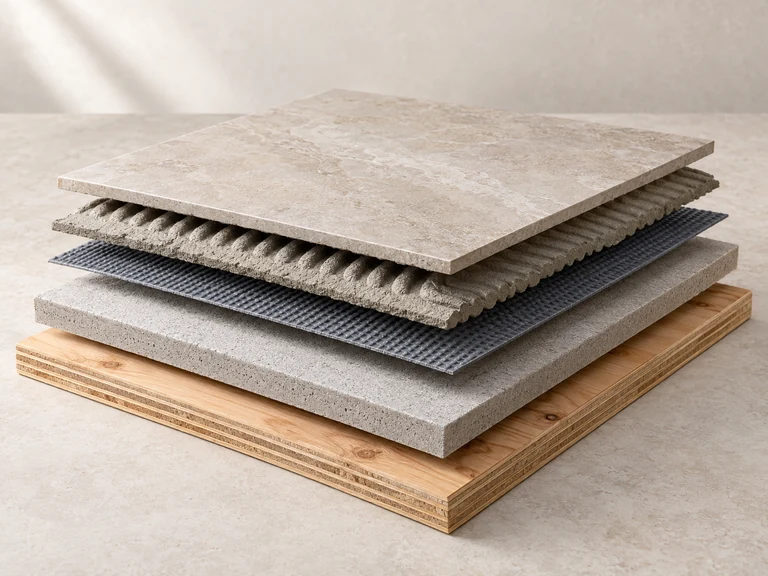
- 01
Substrate & primer
Every MAPEI mortar data sheet starts here: the substrate must be structurally sound, stable, dry and clean, with concrete cured at least 28 days. Under a self-leveler, MAPEI specifies Primer T — a low-VOC, water-based acrylic primer that improves the underlayment's adhesion. The layers above inherit whatever the base gets wrong.
- 02
Self-leveler
Out-of-flat floors get corrected before tile, not under it. MAPEI's self-leveling underlayments — Novoplan 2 Plus, a high-strength cement-based underlayment and repair mix, and Ultraplan 1 Plus, quick-setting and self-drying — flow into place over interior concrete and engineer-approved floors, replacing guesswork screeding with a flat plane for the mortar bed.
- 03
Waterproofing membrane
Mapelastic AquaDefense is a premixed liquid rubber, rolled on in two coats to a final thickness of about 20 mils — roughly a credit card. It dries in about 30 to 50 minutes, can be flood-tested after 12 hours, is IAPMO-listed as a shower-pan liner, and exceeds ANSI A118.10 (waterproofing) and A118.12 (crack isolation).
- 04
Mortar & trowel ridges
The notch ridges are a dosing mechanism, not texture. MAPEI's TDS instructions: comb in one direction, set the tile, then push it perpendicular to the ridges so they collapse and wet the back. Target contact is over 85% of the tile for interior work — over 95% in wet or exterior areas — per MAPEI's data sheets, which reference ANSI A108.5.
- 05
Tile & grout
Before grout, excess mortar comes out of the joints — at least two-thirds of tile depth stays open, per ANSI A108.10. Ultracolor Plus FA fills joints from 1/16" to 3/4", takes foot traffic in 3 to 4 hours, and — formulated without Portland cement — is rated by MAPEI as efflorescence-free, no sealer required.
Stylized CGI rendering — an illustration of an installation stack, not a MAPEI drawing.
The families, explained
Mortars. Grouts. Prep.
The system under the tile, in three families — and a decoder for the ANSI line every bag prints.
A118
Mortars
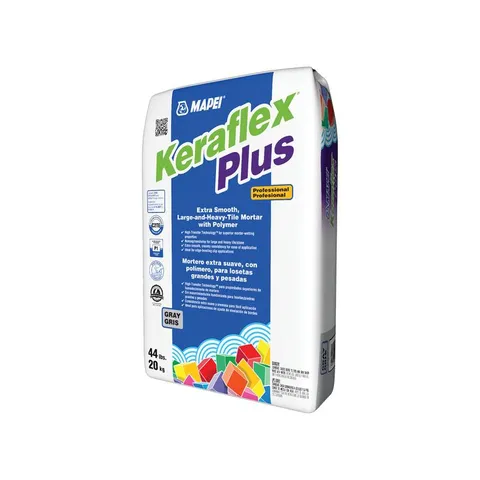
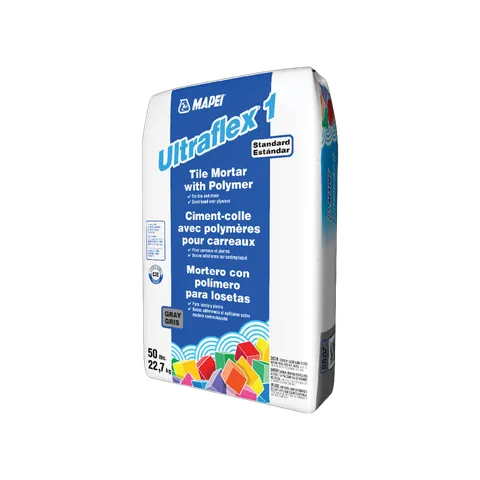
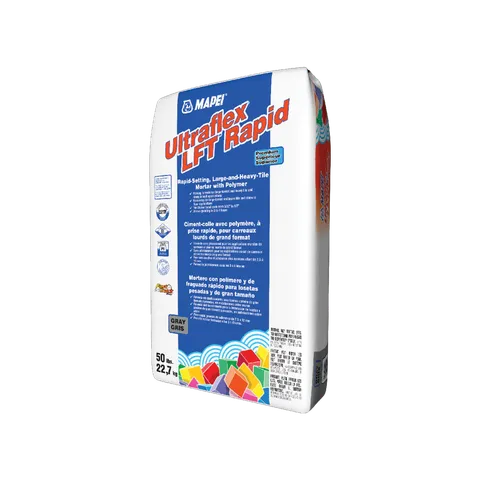
One chemistry ladder, three rungs. Kerabond is the dry-set ANSI A118.1 mortar — cement, mixed with water. Keraflex Plus adds polymer for A118.4 performance on floors, walls and over membranes. Ultraflex LFT and its rapid-setting sibling carry the large-and-heavy-tile designation: nonsag on walls, nonslump on floors, bond coats to 1/2 inch — the class the data sheet itself says was formerly known as 'medium-bed mortar.'
FitsMatch the rung to the tile's size and the layer underneath — the bag's ANSI line, decoded below.
CG2
Grouts
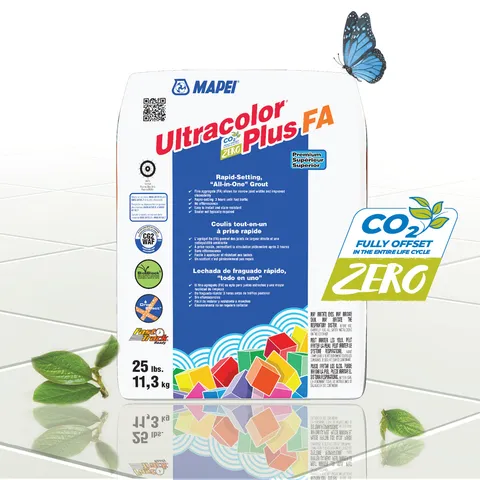
Keracolor S and U are the classic polymer-modified Portland-cement grouts — sanded for 1/8-to-5/8-inch joints, unsanded for 1/16 to 1/8. Ultracolor Plus FA is the consolidation argument: fine-aggregate, fast-setting, one bag covering the full 1/16-to-3/4-inch range as a replacement for sanded and unsanded grouts, rated efflorescence-free with no sealer required. It meets or exceeds ANSI A118.6 and A118.7.
FitsJoint width picks the grout; the TDS coverage chart picks the bag count.
Prep
Prep & waterproofing
The layers under the mortar: Primer T, a low-VOC acrylic primer; Novoplan 2 Plus and Ultraplan 1 Plus self-leveling underlayments for interior floors; and Mapelastic AquaDefense, the roll-on liquid rubber that waterproofs and isolates in-plane cracks up to 1/8 inch in one membrane. MAPEI's mortar data sheets list the company's own membranes among suitable substrates — the stack is designed as a system.
FitsWet areas get membrane; out-of-flat floors get leveler; both get primer where the TDS says so.
Membrane compatibility is a specification, not a preference: MAPEI's Mapelastic AquaDefense data sheet calls for a polymer-modified mortar (ANSI A118.4 / A118.11) or an A118.3 epoxy over its membrane, while Schluter requires unmodified A118.1 mortar or its own setting materials over DITRA. Follow the membrane manufacturer's current spec — always. And coverage moves with the trowel: the same 50-lb. bag of Ultraflex LFT covers 85–95 sq. ft. at a 1/4" notch but 40–50 sq. ft. at 1/2". Estimate from the TDS chart, not the room size.
Read the bag
Reading the mortar bag
MAPEI's U.S. mortar bags and data sheets carry their ANSI designations. The numbers certify chemistry and bond-strength floors; the letters and the LFT mark tell you what the mortar will hold up.
A118.1
Dry-set — the unmodified baseline
Cement mortar mixed with water, no polymer: it cures by cement hydration rather than air-drying, which is why some membrane manufacturers specify it over impervious layers. The spec's shear-strength floor to porcelain is 150 psi at 28 days. In MAPEI's U.S. line, Kerabond is the A118.1 mortar; swap the water for Keralastic latex and MAPEI rates the system to higher modified standards.
A118.4 → A118.15
Modified — and how much
Polymer raises the floor. An A118.4 modified mortar must shear-bond to porcelain above 200 psi at 28 days; A118.15 'improved modified' doubles that to 400 psi. The suffix letters are options — T designates sag resistance for walls, F fast-setting. Keraflex Plus carries A118.4; Ultraflex LFT Rapid's own TDS logs 410 to 625 psi against the 400-psi A118.15 floor.
LFT
Large-and-heavy-tile
MAPEI's designation for the class the trade once bought as 'medium-bed mortar' — the Ultraflex LFT Rapid data sheet says so in exactly those words. LFT mortars are nonsag on walls and nonslump underfoot, running bond coats from 3/32 to 1/2 inch so a heavy porcelain panel cannot settle while curing; plain Ultraflex LFT beds up to 3/4 inch thick.
Over a membrane, the designation that matters is the one the membrane manufacturer specifies — MAPEI calls for polymer-modified over AquaDefense; other systems require unmodified A118.1. Read the membrane's data sheet before the mortar aisle.
The desk's read
How the desk checks an installation order
The order logic nobody writes down — voiced as our desk's read, not the brand's claim.
Buy the layer, not the bag
The desk's read: pick the membrane and substrate first, and let their data sheets pick the mortar class. The same porcelain floor can legitimately demand modified mortar over one membrane and unmodified over another — neither bag is 'better'; one is specified. Bring the membrane's data sheet, or a photo of it, and the mortar decision takes five minutes.
The trowel is the budget
The desk's read: mortar math runs on notch size, not square footage alone. Per MAPEI's coverage chart, one 50-lb. bag of Ultraflex LFT covers 85–95 sq. ft. through a 1/4-inch trowel and 40–50 sq. ft. through a 1/2-inch — large tile can double the bag count on the same floor. Price the trowel row of the TDS before pricing the job.
Lift a tile
The desk's read: the cheapest inspection in tiling is picking a tile back up. Interior work wants better than 85 percent mortar contact; wet and exterior areas want better than 95, per the ANSI method MAPEI's sheets cite. Bare ridges on the tile back mean the trowel is too small or the mortar skinned over — correct it now, not at the grout stage.
The first-bathroom kit
The desk's read: a first wet-area job is four layers, bought together — primer and self-leveler if the floor is out of flat, a roll-on waterproofing membrane, a mortar of the class the membrane specifies, and a fast-setting grout sized to the joint. Sourcing the stack from one system keeps every layer under a single manufacturer's spec book.
Bring the membrane's data sheet — or a photo of the bag — and a specialist matches the mortar class in minutes. Paste the list, however you have it
The working collection
The mortar bench
The chemistry ladder in four bags
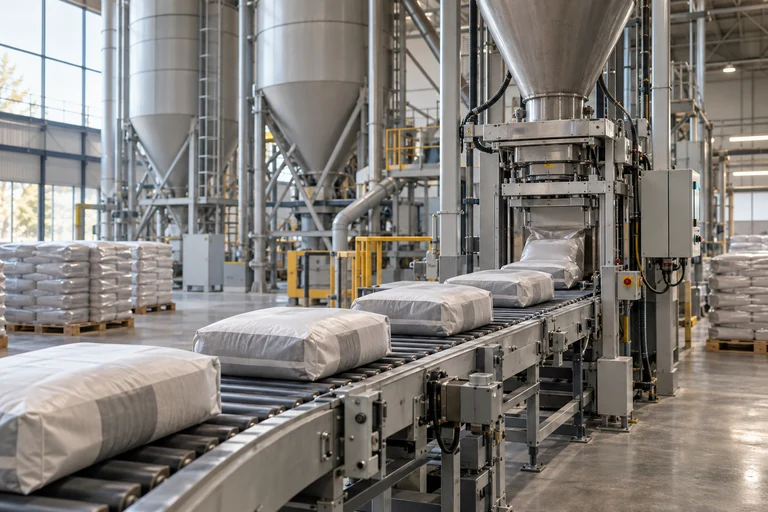
Illustrative production study, not a photograph of the maker's own facility.
Asked at the desk
Questions, answered plainly
What is the difference between modified and unmodified thinset mortar?
Unmodified thinset (ANSI A118.1, 'dry-set') is cement mortar mixed with water; it cures by hydration. Modified thinset (ANSI A118.4) adds polymer for higher bond strength — the porcelain shear floor rises from 150 to 200 psi at 28 days — and A118.15 'improved modified' raises it to 400 psi. Over membranes, use whichever class the membrane manufacturer specifies.
What does LFT mean on a MAPEI mortar bag?
LFT is MAPEI's large-and-heavy-tile designation — the class its own data sheet notes was formerly known as 'medium-bed mortar.' LFT mortars resist sag on walls and slump on floors and apply in bond coats of 3/32 to 1/2 inch (up to a 3/4-inch medium bed for Ultraflex LFT), so large-format tile stays where it is set while curing.
Can I use modified thinset over a waterproofing or uncoupling membrane?
It depends on whose membrane. MAPEI's Mapelastic AquaDefense data sheet calls for a polymer-modified mortar meeting ANSI A118.4 or A118.11 — or an A118.3 epoxy — over its membrane. Schluter requires unmodified A118.1 mortar or its own setting materials over DITRA. There is no universal rule: the membrane manufacturer's current data sheet governs the mortar choice.
Does Ultracolor Plus FA grout need to be sealed?
No — MAPEI's data sheet states sealing is not required, though a penetrating sealer may still be applied optionally. Ultracolor Plus FA is a fast-setting, fine-aggregate grout formulated without Portland cement, which MAPEI rates efflorescence-free and stain-resistant. It grouts joints from 1/16 to 3/4 inch and accepts foot traffic in about 3 to 4 hours.
How much thinset mortar does a 50-lb bag cover?
It depends on the trowel. MAPEI's Ultraflex LFT chart lists 85–95 sq. ft. per 50-lb. bag with a 1/4" x 1/4" notch, 65–75 with 1/4" x 3/8", 40–50 with a 1/2" square notch and 35–40 with a 3/4" medium-bed notch — and notes actual coverage varies with substrate profile and tile type. Estimate from the specific product's TDS.
Who owns MAPEI, and where is its U.S. business based?
MAPEI has been owned by its founding Squinzi family since 1937 — now in its third generation, with Veronica and Marco Squinzi as Group CEOs and Laura Squinzi chairing the board. The Americas headquarters is at 1144 East Newport Center Drive, Deerfield Beach, Florida, and the brand dates its U.S. company to 1983.
The hall closes. The system sets underneath.
The MAPEI lines above are live catalog — priced in the open, the same number for everyone. Setting materials are a system buy: send the job — however you have it — and a human specialist matches every layer to the spec that governs it.
Citations: MAPEI corporate history, anniversary retrospectives and 2024 results announcements (mapei.com, Mapei Sport, trade press); MAPEI U.S. technical data sheets — Ultraflex LFT, Ultraflex LFT Rapid, Ultracolor Plus FA, Kerabond, Keracolor S/U, Mapelastic AquaDefense; TCNA ANSI A108/A118 references; Schluter Systems installation FAQs. Era and anatomy imagery: styled visualizations, not archival photographs or MAPEI drawings.
MAPEI, Ultraflex LFT, Keraflex Plus, Ultracolor Plus FA and Mapelastic AquaDefense are trademarks or registered trademarks of MAPEI S.p.A. and its affiliates. Super Arbor is an independent retailer; brand marks remain the property of their respective owners.