Brand hall
Bruce
Strip oak to waterproof plank — the hardwood name American housing has stood on since 1884.
Bruce · Mountville, Pennsylvania · est. 1884An AHF Products brand — per AHF, a leading U.S. hard-surface flooring manufacturer, 3,000+ team members, plants across the U.S. and in Cambodia
Bruce enters the register as the name American hardwood housing grew up on: per the brand, depended on since 1884; by 1921, operator of what trade histories record as the industry's largest hardwood flooring plant, in Memphis. This hall holds the record — the strip-oak era, the Terminix laboratory, the move to AHF Products — and the education: how to read a carton label, what a Janka number predicts, and why solid boards stop at ground level. Solid, engineered, and Hydropel lines are stocked at Super Arbor.
Wing I
The record
The register, in eight exhibits.
Exhibit 01 — 1884
The Bruce name takes root
Bruce dates itself to 1884 — "Hardwood lovers have depended on Bruce since 1884," per the brand's current pages, which call it "a staple for 140 years." The E.L. Bruce Company that carried the name grew into a dedicated maker of hardwood flooring, with lumber operations reaching back to the 1880s.
Exhibit 02 — 1921
Memphis, hardwood capital
E.L. Bruce Company opened its Memphis plant in 1921 — recorded in building-products trade histories as the industry's largest hardwood flooring plant. Memphis remained the company's home for four decades, and Bruce strip oak flooring became a standard of new American home construction.
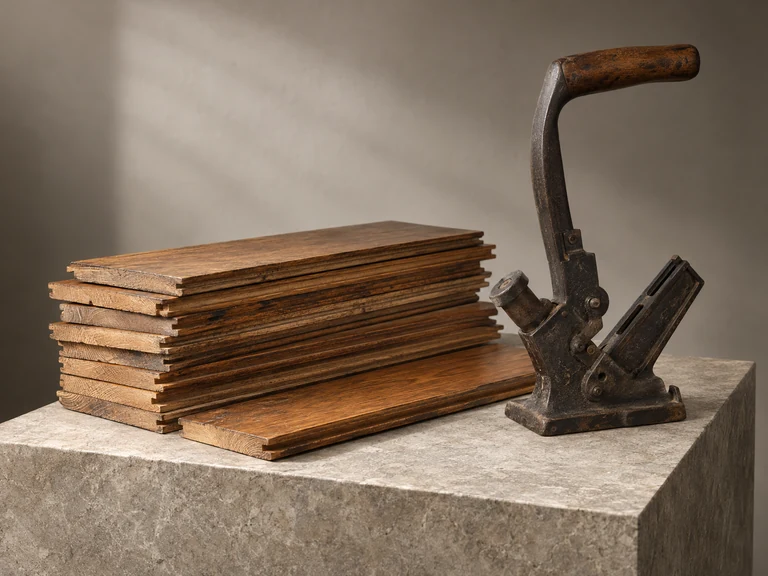
Exhibit 03 — 1927
A laboratory against termites
To defend its floors, the company founded the Bruce Terminix Research Laboratory in Memphis — the name compressed E.L. Bruce's aim to "nix termites." The lab's termiticide earned the first U.S. patent for a termite-control chemical, and Bruce Terminix grew into a national franchise.
Exhibit 04 — 1939
In the architects' catalog
"Bruce hardwood flooring and lumber products" fills an entry in the 1939 Sweet's Catalog — the reference set architects specified from. Trade histories place the rise of factory-finished flooring in the decade that followed; prefinished hardwood, finished under controlled plant conditions, remains the core of the Bruce catalog.
Exhibit 05 — 1984
One hundred years
Building-products trade press marked the brand's centennial with "Bruce at 100," a century on from the stated 1884 start. The anniversary coverage — industry press, not brand copy — is the register's cleanest witness that the date has been kept for generations.
Exhibit 06 — 2019
AHF Products
Armstrong Flooring completed the sale of its Wood Flooring segment to an affiliate of American Industrial Partners on December 31, 2018, and the business — Bruce included — began operating as AHF Products, headquartered in Mountville, Pennsylvania.
Exhibit 07 — 2019
Hydropel makes its case
In September 2019 AHF launched Hydropel, Bruce waterproof hardwood: engineered planks over an ultra-high-density fiberboard core, milled tight to keep spills at the surface. Per AHF, the floor resists water for up to 36 hours — kitchens, bathrooms, and basements included.
Exhibit 08 — Today
Solid, engineered, waterproof
The register today: more than 200 solid styles per Bruce, engineered lines cleared for every grade level, and Hydropel for the wet rooms. AHF Products, which in 2022 press releases described itself as the largest hardwood flooring manufacturer in North America, operates plants across the United States and in Cambodia.
Interactive exhibit
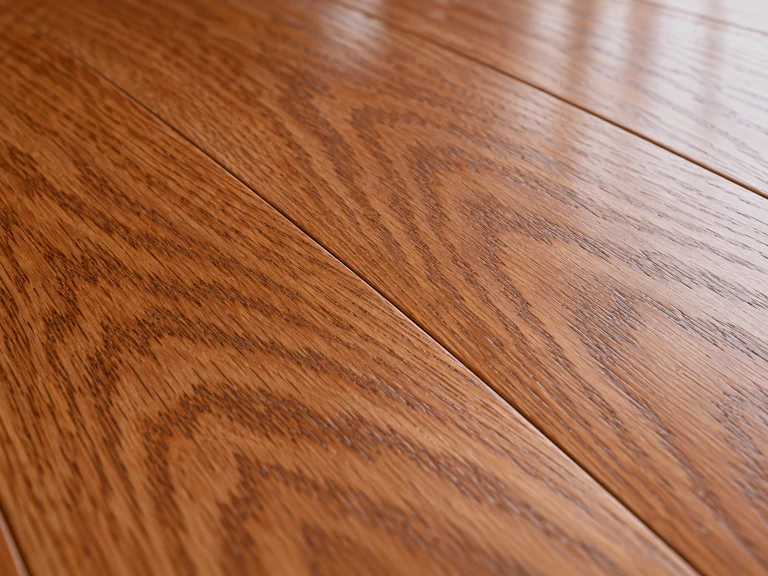
Two boards, opened
A solid board and an engineered board, side by side — the two constructions the carton names. Open the numbered plates.
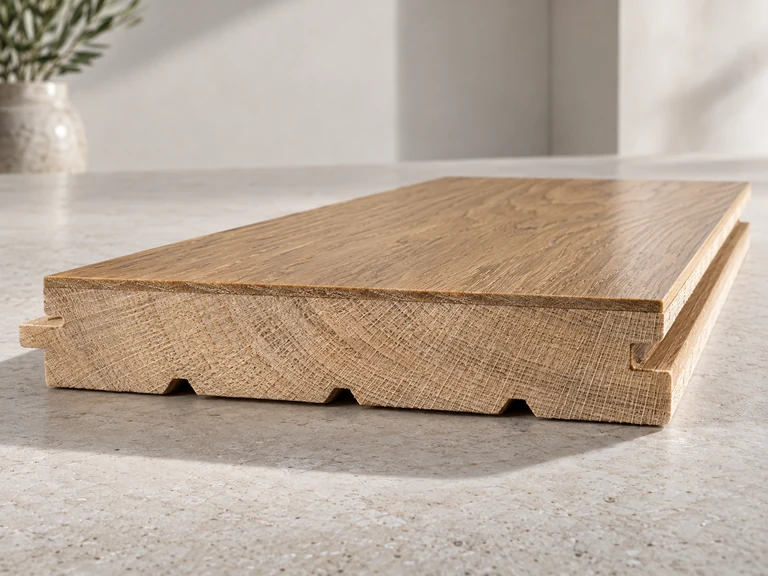
- 01
Solid board — one timber, full depth
The solid half of the pair is milled from a single piece of hardwood, 3/4-inch thick. There is nothing to delaminate and plenty to sand: solid boards can be refinished more than once across a floor's life. The trade-off is movement — one piece of wood swells and shrinks with humidity, which is why solid stays on- or above-grade.
- 02
Veneer wear layer
Everything you see and walk on in an engineered plank is the wear layer — a top veneer of genuine hardwood. Its thickness sets the floor's future: thicker veneers can take a sanding or two, thin ones only light recoating. The NWFA's definition is blunt — in composite engineered flooring, the real wood is this wearable surface.
- 03
Cross-stacked core plies
Beneath the veneer, core plies run in alternating directions, each layer's grain crossing its neighbor's. Wood mostly moves across the grain, so the crossing plies hold one another in check — the engineering in engineered wood. Hydropel swaps conventional plywood for what AHF calls an ultra-high-density fiberboard core, denser and more water-resistant.
- 04
Tongue and groove
Along each edge, a milled tongue seats into the next board's groove. On 3/4-inch solid strip the joint doubles as the fastening point — installers blind-nail through the tongue at an angle, so no fastener shows on the face. On Hydropel, tight-milled locking edges are part of the water defense, closing routes to the subfloor.
- 05
Aluminum-oxide factory finish
The factory finish is urethane loaded with microscopic aluminum-oxide particles, cured under UV light before the carton is sealed — per Bruce, one of the most scratch-resistant coatings available. It is why prefinished floors carry finish warranties measured in decades, and why there is no sanding, staining, or drying time on install day.
Stylized CGI rendering — an illustration of hardwood construction, not a Bruce drawing.
The constructions, explained
Solid. Engineered. Waterproof.
Three constructions under one name — the cards say where each belongs, and the decoder reads the carton.
3/4 in
Solid hardwood
One piece of wood, top to bottom. Bruce solid boards are milled 3/4-inch thick — most in the classic 2-1/4-inch strip — in domestic species such as oak, hickory, and maple, factory-finished in urethane with aluminum oxide. Thickness is the point: solid boards can be sanded and refinished more than once, and Bruce lists more than 200 solid styles. On- or above-grade floors only.
FitsThe refinishable classic for living rooms, bedrooms, and hallways above ground.
Ply core
Engineered hardwood
A real-hardwood wear layer bonded over cross-stacked core plies, the layers running in alternating directions so the board resists the expansion and contraction that moves solid wood. That stability is the license: engineered hardwood installs on, above, or below grade — basements included. How many refinishes it will take depends on the wear layer's thickness, so check the spec, not the species.
FitsThe grade-flexible build — the hardwood construction for basements.
36-hr
Hydropel
Bruce's waterproof hardwood line, launched in 2019: an engineered plank over an ultra-high-density fiberboard core, edges milled tight so surface water stays surface water. Per AHF Products, Hydropel resists water for up to 36 hours and installs anywhere in the home — kitchens, bathrooms, basements. Bruce backs it with a 50-year residential warranty and a lifetime structural warranty, its longest engineered coverage.
FitsReal hardwood for the rooms that get wet.
Wood moves with moisture. Bruce's instructions require an enclosed, dry building held at 60–80°F and 30–50% humidity for 14 days before and during installation, with flooring stored — and moisture-metered — in the environment where it will perform. Solid 3/4-in. boards install on- or above-grade only; below grade, including any basement, use engineered construction.
Read the carton
Reading the carton
One Bruce solid-oak carton label, decoded — the construction, the width, and the order math.
3/4 IN
Thickness declares construction
Three-quarters of an inch is the tell for solid wood — one piece, full depth, sandable more than once, and by Bruce's instructions limited to on- or above-grade floors. A slimmer figure signals engineered construction: Hydropel planks, for instance, run 7/16 inch — a hardwood wear layer over a dense core, which is what earns below-grade clearance.
2-1/4 IN
Width sorts strip from plank
Two and a quarter inches is the classic strip — the profile Bruce's Memphis mills made a standard of American housing. Boards three inches and wider read as plank, and width raises the moisture stakes: Bruce's instructions allow a 3 percent flooring-to-subfloor moisture-content difference for strip, but only 2 percent for plank. Wider wood, tighter tolerances.
20 SQ FT/CTN
Coverage runs the order math
Hardwood is ordered as area, not carton count. Measure length times width, add the allowance Bruce's instructions require — 5 percent for cutting and grading, 10 percent for diagonal layouts, 10–15 percent for glue-down — then divide by the carton figure and round up. A 230-square-foot room, straight-laid: 241.5 square feet, thirteen cartons.
Species hardness reads on a separate scale: the Janka test presses a 0.444-inch steel ball to half its diameter into the wood — red oak's 1290 lbf is the industry's comparison baseline, and hickory runs near 1820. Hardness predicts denting, not scratching; the aluminum-oxide finish handles that.
The desk's read
How the desk checks a hardwood order
The order logic nobody writes down — voiced as our desk's read, not the brand's claim.
Grade level picks the line
The desk's read: let the floor's elevation make the first cut. Below ground — any basement — solid is off the table by Bruce's own instructions, so the choice is engineered or Hydropel. On or above grade, all three lines qualify, and the question becomes refinishing ambitions (solid) versus moisture insurance (Hydropel for kitchens and baths). Decide the room before the color.
Buy coverage, not cartons
The desk's read: the number that matters on the carton is square feet, and it varies by line — 20 for classic Bruce solid strip, 22.6 on one Hydropel plank format. Measure length times width for each room, add the ordering allowance Bruce's instructions call for — 5 percent for cutting and grading, 10 for diagonals, 10–15 for glue-down — then divide and round up.
The skipped-acclimation mistake
The desk's read: most hardwood grief is moisture grief, booked before the first board goes down. Bruce's instructions want the building enclosed, wet work finished and dry, and the room held at 60–80°F and 30–50 percent humidity for 14 days before and during installation — with flooring and subfloor moisture-metered, not guessed. Budget that calendar into the project, not out of it.
A sensible first order
The desk's read: for a first hardwood buy, the reference specimen is Bruce solid red oak strip — 3/4 by 2-1/4, the profile the brand built its name on — or Hydropel where water is a fact of the room. Check the Janka number against your household (red oak's 1290 is the baseline; hickory runs harder), and keep one unopened carton back for future repairs.
Measured the room but not sure how many cartons? Put it on a list and let a specialist run the math. Paste the list, however you have it
The working collection
The floor bench
Solid strip to waterproof plank, one construction per plate
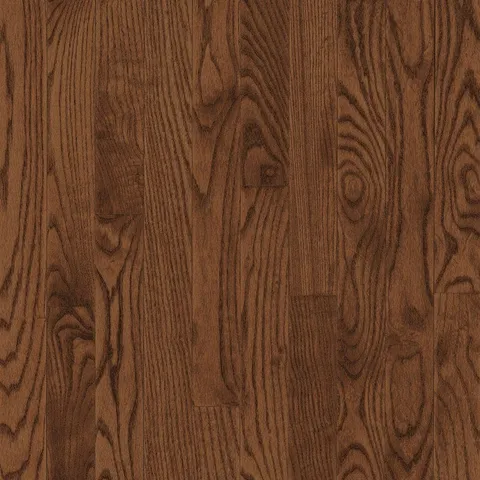
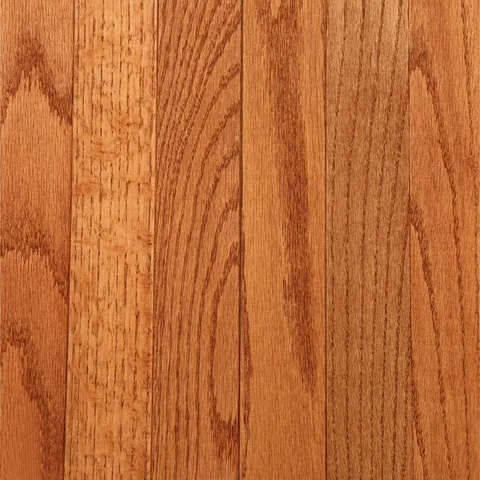
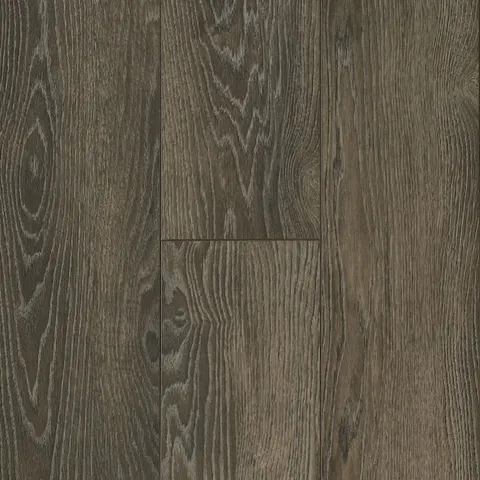
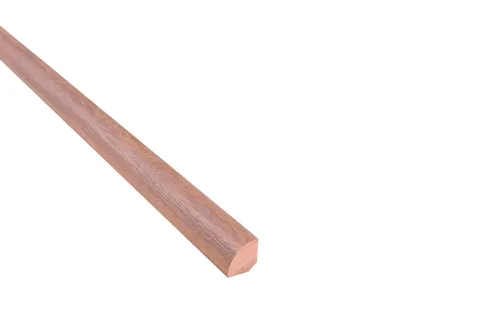
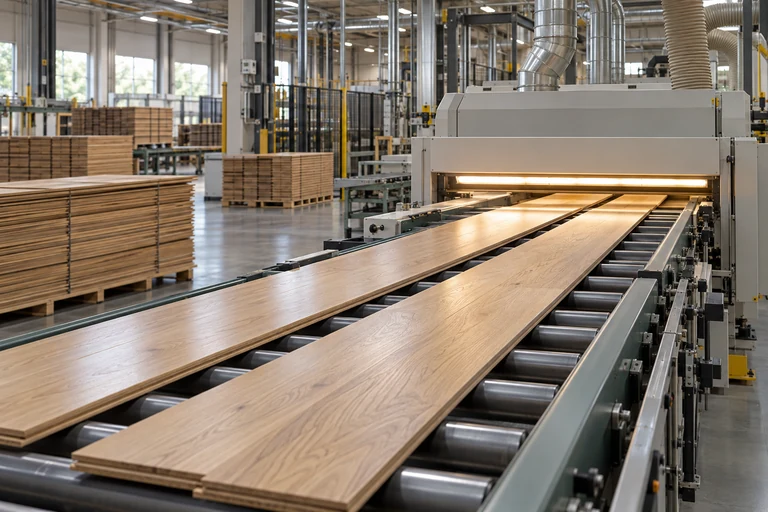
Illustrative production study, not a photograph of the maker's own facility.
Asked at the desk
Questions, answered plainly
Who makes Bruce hardwood flooring today?
Bruce is a brand of AHF Products, headquartered in Mountville, Pennsylvania. The business formed when Armstrong Flooring completed the sale of its Wood Flooring segment to an affiliate of American Industrial Partners on December 31, 2018, and it has operated as AHF Products since 2019. In 2022 press releases AHF described itself as the largest hardwood flooring manufacturer in North America; its current materials call it a leading U.S. hard-surface flooring manufacturer with more than 3,000 team members.
Is Bruce flooring solid or engineered hardwood?
Both. Bruce sells solid hardwood — one-piece boards, typically 3/4-inch thick, refinishable more than once, for on- or above-grade rooms — and engineered hardwood, a real-wood wear layer over cross-stacked plies that can install on, above, or below grade. Its Hydropel line is engineered hardwood built to a waterproof specification.
Can Bruce solid hardwood be installed in a basement?
No. Bruce's installation instructions state solid hardwood flooring may be installed on- or above-grade level, and NWFA guidelines likewise do not recommend solid wood below grade. A basement is below grade; use engineered construction there — Bruce's engineered lines, including Hydropel, are cleared for below-grade installation.
What is Bruce Hydropel?
Hydropel is Bruce's waterproof hardwood flooring line, launched by AHF Products in September 2019. It is engineered hardwood — a genuine wood surface over an ultra-high-density fiberboard core — that, per AHF, resists water for up to 36 hours and can be installed anywhere in the home, including kitchens, bathrooms, and basements. It carries a 50-year residential warranty and a lifetime structural warranty.
What does a Janka hardness rating mean for hardwood floors?
The Janka test measures the force needed to press a 0.444-inch steel ball halfway into a wood sample — a proxy for dent resistance. Red oak, at 1290 pounds-force, is the industry's comparison baseline; hickory, around 1820, is harder. Higher numbers resist denting better, though the factory finish, not species hardness, governs scratch resistance.
How many cartons of Bruce flooring do I need?
Multiply each room's length by width for square footage, then add the ordering allowance in Bruce's instructions: 5 percent for cutting and grading, 10 percent for diagonal layouts, and 10–15 percent for glue-down installs. Divide by the carton's coverage — 20 square feet for classic Bruce solid strip — and round up to whole cartons. A 230-square-foot room, straight-laid, needs 13 cartons.
The hall closes. The oak keeps wearing in.
The Bruce lines above are live catalog — priced in the open, the same number for everyone. Flooring is a coverage buy: send the room measurements — however you have them — and a human specialist prices every line and checks the math.
Citations: Bruce.com product pages, resource guides & installation instructions · AHF Products & American Industrial Partners releases · NWFA installation guidelines · Terminix corporate history · Tennessee State Library and Archives (TeVA) · trade press (The Merchant Magazine, Wood Floor Business, Hardwood Floors Magazine, Floor Daily) Era and anatomy imagery: styled visualizations, not archival photographs or Bruce drawings.
Bruce® and Hydropel™ are trademarks of AHF Products or its affiliates. ©2026 AHF Products. All Rights Reserved. Super Arbor is an independent retailer; brand marks remain the property of their respective owners.