
Brand hall
Armstrong Flooring
Cork in Pittsburgh, 1860. Linoleum in Lancaster, 1908. Vinyl for the century since.
Armstrong Flooring · Mountville, Pennsylvania · est. Pittsburgh, 1860An AHF Products brand — per AHF (2022), 11 manufacturing facilities and four U.S. distribution centers
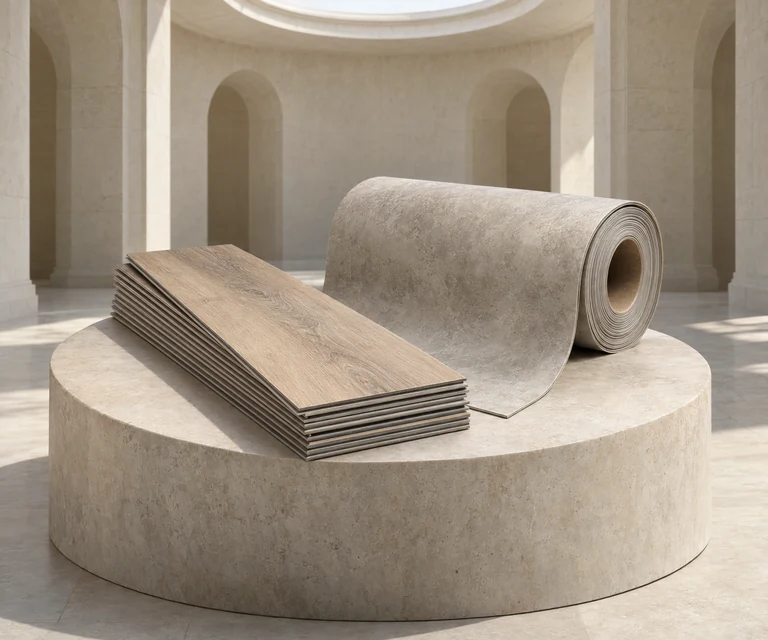
Armstrong began in 1860 as a Pittsburgh cork-cutting shop and shipped its first linoleum from Lancaster, Pennsylvania in 1908; vinyl carried the name through the century that followed. This hall holds that record — cork to linoleum to resilient vinyl — alongside the working education: what a wear layer is, why mils are not millimeters, and how sheet, VCT, and luxury vinyl divide the work. Armstrong Flooring lines are stocked at Super Arbor.
Wing I
The record
The register, in eight exhibits.
Exhibit 01 — 1860
The cork-cutting shop
Thomas Morton Armstrong, twenty-four, put $300 of shipping-clerk savings into a small cork-cutting shop in Pittsburgh. The firm cut bottle stoppers by hand — the origin Armstrong's corporate history records as the founding of what became Armstrong Cork Company.
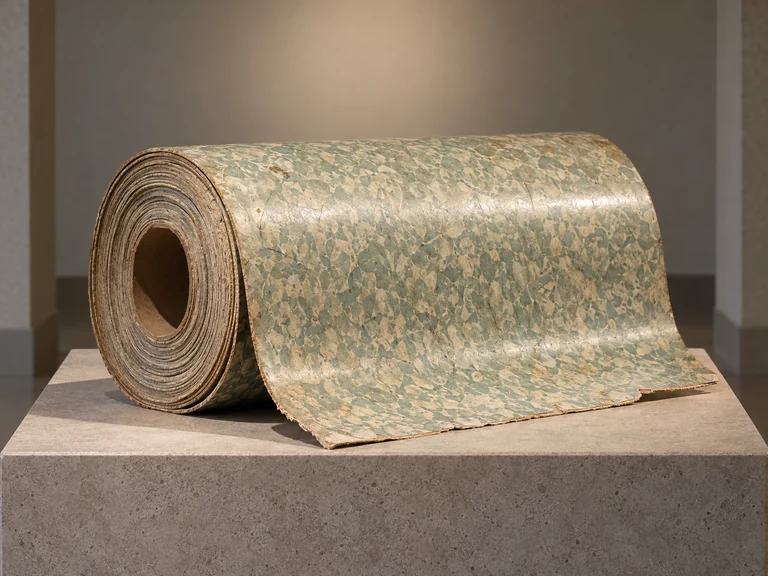
Exhibit 02 — 1864
A name on every cork
The shop began stamping "Armstrong" on each cork it sold — a practice the company's own history describes as pioneering brand-making. That decade the business took the name Armstrong, Brother & Company.
Exhibit 03 — 1908
Linoleum at Lancaster
Armstrong built a linoleum plant in a cornfield at the edge of Lancaster, Pennsylvania. The first Armstrong linoleum came off the line in 1908 and was offered to the trade in 1909; flooring set the company's course for the next century.
Exhibit 04 — 1929
Headquarters to Lancaster
The company moved its headquarters from Pittsburgh to Lancaster, where its flooring operations had grown. Armstrong Cork Company's common stock listed on the New York Stock Exchange in 1935.
Exhibit 05 — 1955
The vinyl catalog
Postwar print advertising shows the linoleum-to-vinyl turn underway: a 1955 Armstrong Cork spread lists vinyl Corlon and Excelon tile alongside linoleum. Vinyl's printable, resilient surface would displace linseed-oil linoleum across the line.
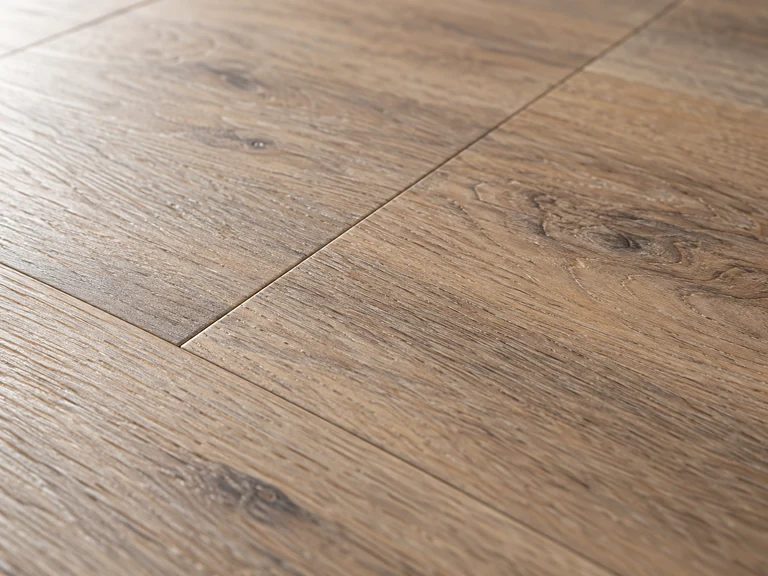
Exhibit 06 — 1970
Solarian and the no-wax era
Solarian, a vinyl line finished with a clear urethane surface marketed as no-wax, reached the market in 1970. Armstrong ended linoleum production in 1974; resilient vinyl — sheet and tile — now carried the flooring business.
Exhibit 07 — 1980
Armstrong World Industries
Armstrong Cork Company changed its name to Armstrong World Industries — reflecting, in its words, growth beyond the cork business. Flooring and ceilings ran side by side under one corporate roof for the next thirty-six years.
Exhibit 08 — 2016
Independent, then AHF
Armstrong World Industries completed the separation of Armstrong Flooring, Inc. on April 1, 2016; the new company began regular-way trading on the NYSE as AFI on April 4. In 2022, AHF Products completed its purchase of certain Armstrong Flooring assets, including brand-name rights and three U.S. plants; the brand operates today from AHF's Mountville, Pennsylvania base.
Interactive exhibit
One plank, opened
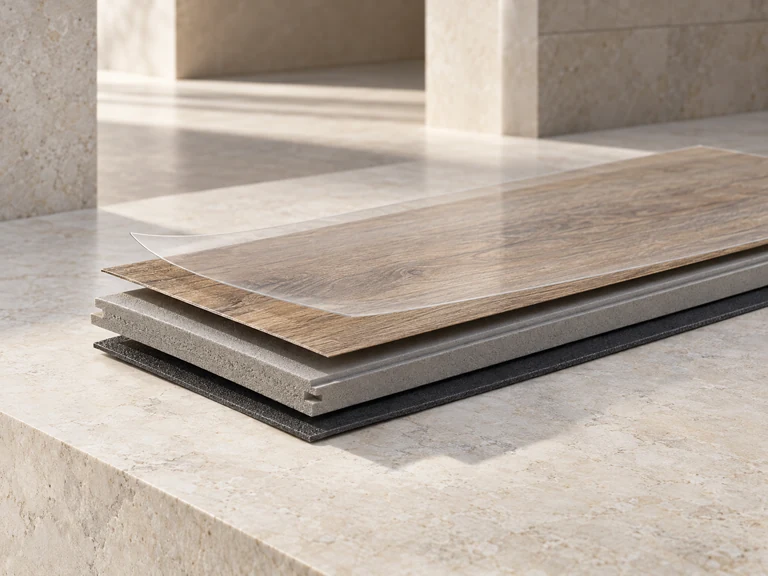
A luxury vinyl plank, separated into the layers the spec sheet names. Open the numbered plates.
- 01
Finish coat
Topmost and thinnest: a urethane finish cured over the wear layer. Armstrong Flooring data sheets list "Urethane with Diamond 10 Technology" here — a coating the brand says resists scratches, scuffs, and stains. The finish takes the daily cleaning; when a spec sheet names a coating, this layer is what it means.
- 02
Wear layer
A clear vinyl film measured in mils — thousandths of an inch. It is the sacrificial thickness between traffic and the printed pattern, and the single number that best predicts service life. Residential planks commonly carry 6–12 mils; commercial specifications run 20 mils and up.
- 03
Print film
A photographically printed decor layer gives luxury vinyl its wood or stone visual. The image itself has no wear resistance; everything above it exists to protect it. When a floor "wears through," this is the layer that shows it — pattern loss where the wear layer has gone.
- 04
Vinyl core
The body of the plank. Flexible cores glue down and follow the subfloor; rigid composite cores — stone-polymer or wood-polymer — click together and bridge minor imperfection. The core sets the installation method and the feel underfoot; it contributes stiffness and dent resistance, not scratch resistance.
- 05
Backing
The underside layer — commonly a foam or cork pad attached at the factory. It adds underfoot softness and quiets footfall. On Armstrong's sheet side, cushioned constructions such as CushionStep play the equivalent role. Backing is comfort and acoustics; it carries no traffic rating.
Stylized CGI rendering — an illustration of resilient-flooring construction, not an Armstrong Flooring drawing.
The formats, explained
Sheet. Tile. Plank.
Resilient flooring ships three ways; the spec line — not the aisle sign — says which one you are holding.
12 FT
Vinyl sheet
Resilient flooring in rolls up to twelve feet wide, so most rooms take few or no seams — the reason sheet remains the wet-room format. Armstrong's residential lines include CushionStep, StrataMax, and FlexStep; CushionStep pairs a cushioned body with a urethane finish Armstrong brands Diamond 10 Technology. Note the units: sheet data sheets list wear layers in inches — CushionStep Better's 0.010 in. is 10 mils.
FitsFit for: kitchens, baths, laundry, rentals — rooms where seams are the failure point.
1/8 IN
Vinyl composition tile (VCT)
Mostly mineral filler bound in vinyl, pressed into 12 in. x 12 in. tiles. Armstrong's Standard Excelon Imperial Texture is the reference line — ASTM F1066 Class 2, through-pattern, so the color runs the full 1/8 in. gauge and the tile wears without losing its face. Armstrong lists polish as its traditional maintenance; the low tile price assumes that program.
FitsFit for: schools, retail, corridors — spaces with a maintenance program on staff.
20 MIL
Luxury vinyl plank + tile
A printed decor film under a clear wear layer, carried on a flexible glue-down body or a rigid click core. Armstrong's residential lines include American Charm luxury vinyl and the Lutea rigid-core collection; its commercial data sheets pair a 2.5 mm gauge with a 20 mil wear layer to meet ASTM F1700's commercial class. In this family, buy by the mil.
FitsFit for: living areas and storefronts — anywhere bought on looks and kept on mils.
Wear-layer mils are not overall thickness. One mil is 0.001 in. — about 40 to a millimeter — and only the clear wear layer earns a traffic rating. A thick plank with a thin wear layer is still a light-duty floor: buy by the mil number, not the gauge.
Read the spec line
Reading a resilient spec line
Three tokens from an Armstrong Flooring commercial data sheet. Two units — mils and millimeters — and the format tell you the floor's whole story.
LVT
The format
The first token names the construction, and each format has its own standard. Sheet is roll goods — twelve-foot widths, minimal seams. VCT is vinyl composition tile under ASTM F1066, mineral-filled with color through the gauge. LVT and LVP are luxury vinyl under ASTM F1700 — a printed film beneath a clear wear layer. Numbers only compare within a format, so fix this token first.
20 MIL
Wear layer — mils, not millimeters
A mil is 0.001 inch; about 40 of them make one millimeter. The mil figure measures only the clear wear layer — the surface that takes traffic — and it is the spec that predicts service life. Common residential planks carry 6–12 mils; ASTM F1700's commercial class requires 0.020 in. of wear layer, which is the 20 mil on Armstrong's commercial LVT sheets.
2.5 MM
Overall gauge — the other unit
Millimeters measure the whole board — backing, core, print film, and wear layer together. Gauge buys stiffness, underfoot feel, and tolerance of subfloor flaws; it buys no scratch life. Armstrong's own catalog proves the point: a 2.4 mm residential sheet carries a 10 mil wear layer, while a 2.5 mm commercial tile carries 20 — the same thickness class, twice the wear surface.
The VCT exception: Armstrong's Standard Excelon is through-pattern, so its listed wear layer equals its full 1/8 in. gauge — the one resilient format where the two numbers are the same.
The desk's read
How the desk checks a resilient order
The order logic nobody writes down — voiced as our desk's read, not the brand's claim.
Choose the format before the color
The desk's read: the room picks the construction. Standing water and few seams — sheet. A maintained commercial corridor with a polish schedule — VCT. Click installation over an imperfect subfloor, or a wood visual underfoot — luxury vinyl. Decide the format first; every line above publishes a data sheet, and the numbers only compare fairly within a format.
The mil is the money
The desk's read: two floors can share a price and a gauge and live different lives. Armstrong's own catalog shows the spread — a 2.4 mm residential sheet carries a 10 mil wear layer; a 2.5 mm commercial tile carries 20. Nearly identical thickness, double the wear surface. Compare the mil line on the data sheet before anything else.
VCT's price has a schedule attached
The desk's read: VCT is the lowest sticker in resilient flooring, and Armstrong's spec page lists polish as its traditional maintenance. Buy it where a maintenance program exists to strip and re-coat on schedule. Where nobody will keep that schedule, a 20 mil luxury vinyl with a factory urethane finish asks less of the building.
First buy: read the sheet, then order the overage
The desk's read: pull the data sheet before the cart — format, ASTM class, wear layer, gauge — and match it to the traffic, not the photo. Order from one production run where color continuity matters, keep a box back for repairs, and follow the manufacturer's installation instructions and local code on subfloor prep and moisture testing.
Not sure whether the job wants sheet, tile, or plank? Put it on a list and let a specialist read the spec. Paste the list, however you have it
The working collection
The resilient bench
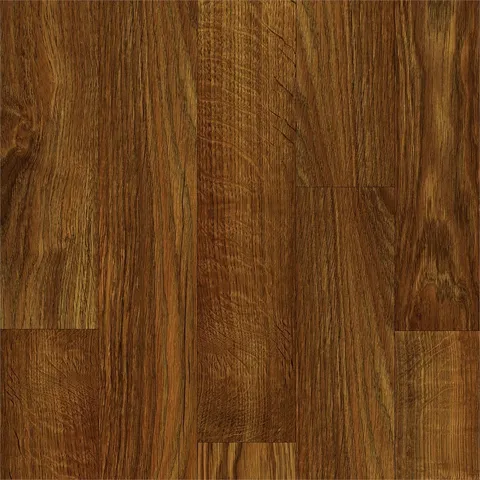
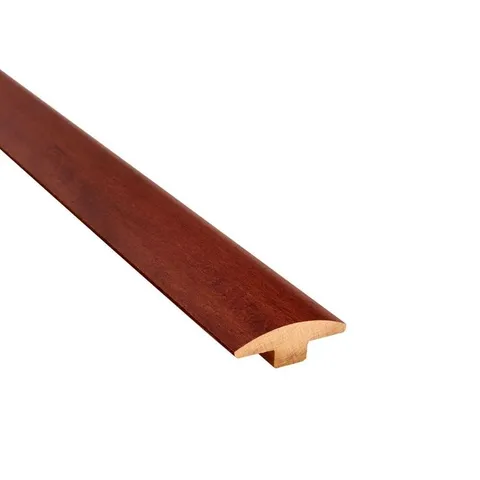
The four working formats — VCT, engineered tile, sheet, and glue-down plank.

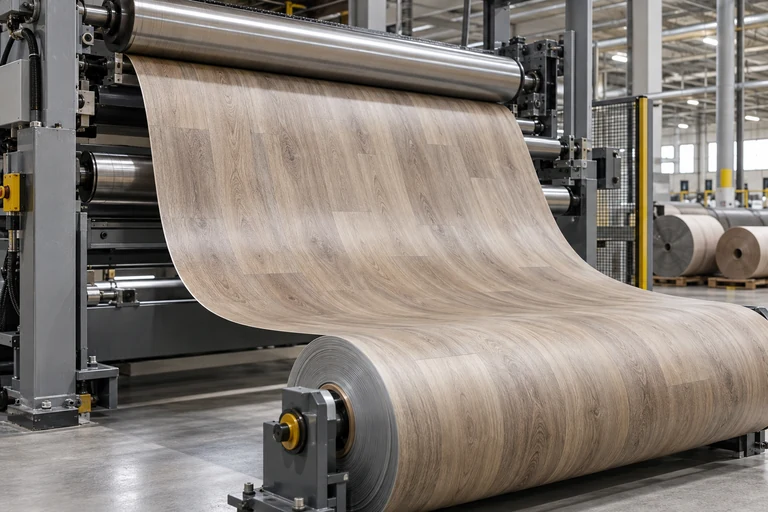
Illustrative production study, not a photograph of the maker's own facility.
Asked at the desk
Questions, answered plainly
Is Armstrong Flooring the same company as Armstrong Ceilings?
No. Armstrong World Industries separated its flooring business in April 2016, creating Armstrong Flooring, Inc. as an independent public company. Armstrong World Industries continues today as a ceiling and wall solutions maker; the Armstrong Flooring brand is separately operated under AHF, LLC. The two share a founding history but are different companies.
Who owns Armstrong Flooring today?
AHF Products. In 2022, AHF closed its purchase of certain Armstrong Flooring assets, including rights to the Armstrong Flooring brand name and three U.S. manufacturing facilities in Lancaster and Beech Creek, Pennsylvania, and Kankakee, Illinois. AHF is headquartered in Mountville, Pennsylvania; per its site, Armstrong Flooring trademarks are owned by AHF, LLC.
What does "mil" mean on a vinyl flooring spec?
A mil is one-thousandth of an inch (0.001 in.) — not a millimeter. About 40 mils equal one millimeter. On resilient flooring, mils measure the clear wear layer over the printed pattern: a 20 mil wear layer is roughly 0.5 mm of protective surface. Overall plank thickness is quoted separately, in millimeters.
How thick should a vinyl wear layer be?
Match it to traffic. Independent flooring references put common residential wear layers at 6–12 mils, with 20 mils and up as the commercial specification; ASTM F1700 sets a 0.020 in. (20 mil) minimum wear layer for commercial-class solid vinyl. Armstrong Flooring's commercial luxury vinyl data sheets list 20 mil wear layers.
What is the difference between VCT and luxury vinyl (LVT)?
VCT — vinyl composition tile — is mostly mineral filler with color running through its full gauge (ASTM F1066); it costs the least and is traditionally maintained with polish. Luxury vinyl (ASTM F1700) laminates a printed film beneath a clear wear layer and a factory finish, so it carries its visual without polishing. LVT durability follows the wear layer, measured in mils.
When was Armstrong founded?
In 1860, when Thomas Morton Armstrong bought a small cork-cutting shop in Pittsburgh — the origin recorded in Armstrong's corporate history. The company produced its first linoleum at Lancaster, Pennsylvania in 1908, shifted to vinyl in the mid-twentieth century, and its flooring business became today's Armstrong Flooring.
The hall closes. The floor outlasts the fashion.
The Armstrong Flooring lines above are live catalog — priced in the open, the same number for everyone. Resilient flooring is a coverage buy: send the room measurements — however you have them — and a human specialist prices every line and checks the math.
Sources: Armstrong World Industries corporate history (armstrong.com) · Armstrong Flooring product pages and data sheets (armstrongflooring.com, floorexpert.com) · AHF Products press releases (ahfproducts.com, prnewswire.com) · SEC filings (sec.gov) · ASTM F1066 / F1700 · independent flooring references. Era and anatomy imagery: styled visualizations, not archival photographs or Armstrong Flooring drawings.
All trademarks are owned by AHF, LLC, or its subsidiaries or affiliates. Super Arbor is an independent retailer; brand marks remain the property of their respective owners.