The James Hardie hall pairs a working record with working instruction. The record: an import business founded in Melbourne in 1888 that developed asbestos-free fibre cement technology in the mid-1980s and now runs its U.S. business from Chicago. The instruction: how a fiber cement wall actually goes together — barrier, courses, flashing, trim, fasteners — and how to read a plank label before buying one. The lines on this floor are the ones stocked at Super Arbor: lap, panel-and-batten, and backer board.
Wing I
The record
The register, in eight exhibits.
Exhibit 01 — 1888
An import house in Melbourne
James Hardie leaves his family's tannery business in Scotland and emigrates to Melbourne, establishing an import business. Fellow Scot Andrew Reid joins him in 1892 and becomes a full partner in 1895. The firm's name is set before its product is.
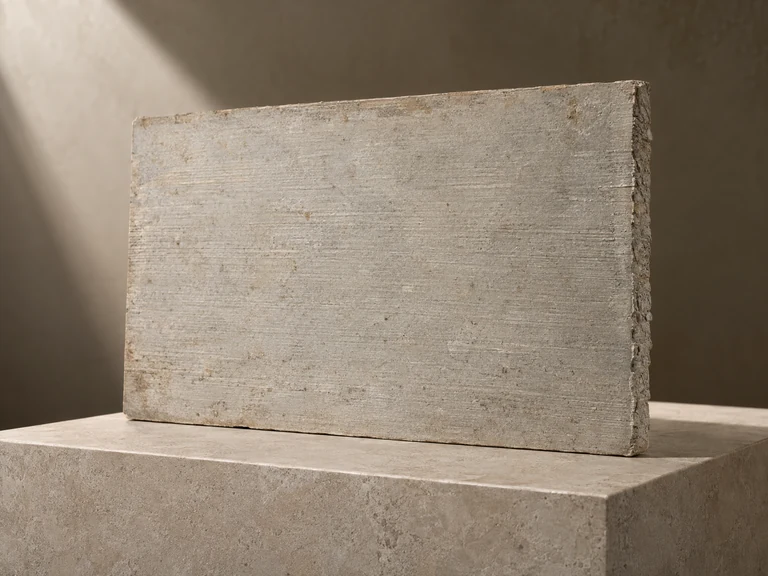
Exhibit 02 — 1903
Fibro-cement, imported
On a London trip, James Hardie encounters fibro-cement — a new French-made roofing and lining slate — and begins importing it into Australia. Building materials become the trade. Hardie retires in 1911, selling his half of the business to Andrew Reid, whose family leads the company until 1995.
Exhibit 03 — 1951
Listed in Australia
The publicly owned company, later known as James Hardie Industries Ltd, lists on the Australian stock exchange under the stewardship of the Reid family, which guided the expanding business from 1911 until 1995 — from importer to manufacturer of building products across Australia.
Exhibit 04 — Mid-1980s
Asbestos-free fibre cement
The pivot the company's own history records: in the mid-1980s, James Hardie "pioneered the development of asbestos-free fibre cement technology," moving its product line away from asbestos and onto the fiber cement it sells today. The company now describes itself as the inventor of modern fiber cement.
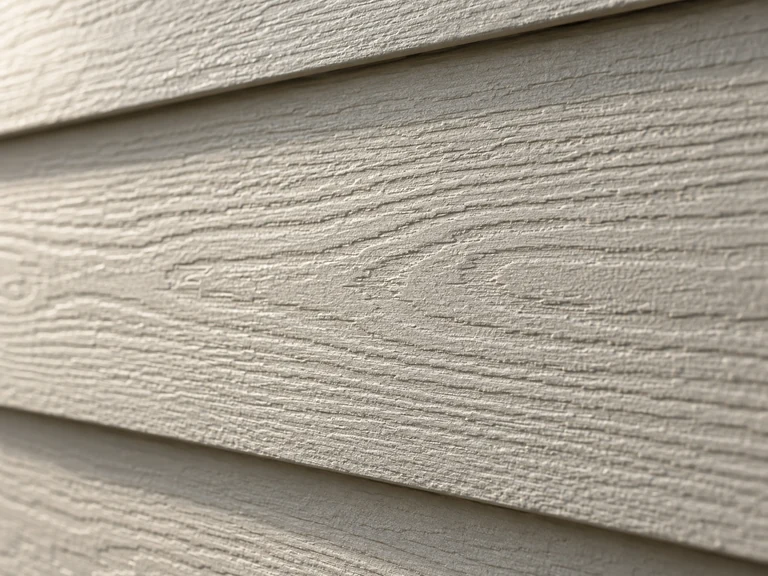
Exhibit 05 — 1990
American manufacturing
Having begun marketing fiber cement to U.S. builders in the late 1980s, James Hardie opens its first American plant in Fontana, California — independent accounts date the opening to early 1990. The United States becomes the company's defining market over the following decade.
Exhibit 06 — 2009
HardieZone®: Engineered for Climate®
James Hardie launches the HardieZone system in North America. The premise, as the company frames it: eight climatic variables that primarily affect siding's long-term performance, resolved into ten zones — one product line, HZ5®, engineered for zones 1 through 5, and another, HZ10®, for zones 6 through 10.
Exhibit 07 — 2021
U.S. headquarters, Chicago
James Hardie opens its U.S. headquarters at 303 East Wacker in Chicago — a 68,000-square-foot office above the Chicago River, formally opened in November 2021. The parent, James Hardie Industries plc, remains domiciled in Ireland following moves recorded in the company's own history.
Exhibit 08 — 2025
AZEK joins; JHX on the NYSE
James Hardie completes its acquisition of The AZEK Company on July 1, 2025 — a cash-and-stock transaction the company valued at $8.4 billion including debt — adding TimberTech® decking and other outdoor-living brands. The same day, James Hardie's ordinary shares begin trading on the NYSE as JHX.
Interactive exhibit
One wall, opened
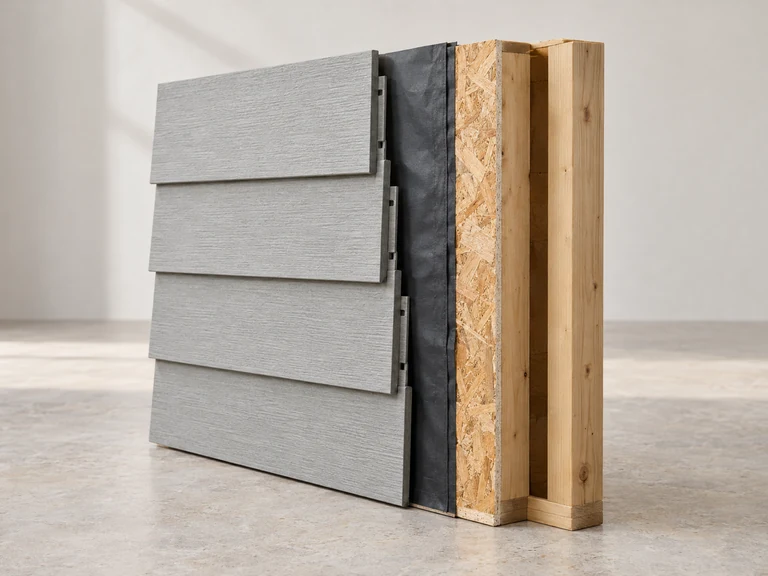
A fiber cement clad wall, separated into its courses and layers. Open the numbered plates.
- 01
Lap siding course
Planks hang in horizontal courses, each lapping the one below by a minimum of 1-1/4 inches — the overlap James Hardie specifies for both face and blind nailing. A 1-1/4-inch starter strip kicks the first course to the same angle as the rest, and factory-finished edges meet at butt joints. On HZ5® lap siding, a drip edge is added for improved water management.
- 02
Water-resistive barrier
The siding is the cladding; the barrier behind it is the waterproofing. James Hardie's instructions require a water-resistive barrier "in accordance with local building code requirements," installed with penetration and junction flashings — and state plainly that James Hardie assumes no responsibility for water infiltration. The wall's drainage plane is built before the first plank goes up.
- 03
Flashing and clearances
Water is managed at every edge. Kickout flashing is required where a roof meets a wall, deflecting runoff away from the siding and the barrier behind it. The instructions call for 6 inches of clearance to finished grade, 1 to 2 inches above roofs and decks, and 1/4 inch above horizontal flashing — gaps that keep fiber cement out of standing water.
- 04
Trim and battens
Fiber cement trim finishes what the field planks leave open: corners, windows, doors, fascia. Hardie® Trim Batten boards pair with Hardie® Panel vertical siding to achieve, per the brand's page, "the beloved board-and-batten modern farmhouse or Tudor look." Like the siding, trim is available with factory ColorPlus® finishes, keeping the whole envelope in one noncombustible material family.
- 05
Fastening
Planks fasten to braced studs at a maximum 24 inches on center, or to minimum 7/16-inch OSB sheathing. Corrosion-resistant siding nails drive perpendicular, heads snug against the board — never overdriven, never angled. Aluminum fasteners, staples, and clipped-head nails are prohibited. Blind nailing at the top edge hides the fastener under the next course's overlap.
Stylized CGI rendering — an illustration of cladding layers, not a James Hardie drawing.
The families, explained
Plank. Panel. Backer.
Fiber cement in three jobs — lap siding, vertical panel with trim, and the board behind tile. The cards say which is which.
HZ5 / HZ10
Hardie® Plank lap siding
The horizontal course that carries the brand — per James Hardie, citing the Freedonia Group's 2025 global cladding report, the #1 brand of fiber cement siding in North America. Retail labels carry the zone, HZ5® or HZ10®, alongside width and length; 8.25 in × 144 in is the common spec. Noncombustible per ASTM E136, with a 30-year non-prorated, limited, transferable substrate warranty; primed or ColorPlus®.
FitsThe default wall — horizontal courses over most framed American homes.
Board & Batten
Hardie® Panel + Hardie® Trim battens
Vertical panel siding in Select Cedarmill®, Smooth, Stucco, and Sierra 8 textures; add Hardie® Trim Batten boards over the seams and, per the brand, "you'll achieve the rustic board-and-batten look that defines the modern farmhouse." Same substrate story as the lap line: noncombustible fiber cement, a 30-year non-prorated, limited, transferable substrate warranty on the panel, and factory ColorPlus® finishes available across both.
FitsGables, farmhouse elevations, and accent walls.
Backer
Hardie® Backer cement board
The interior member of the family: fiber cement backer board under tile. James Hardie calls it the most preferred brand of cement backer board among tile installers, per a 2021 Clear Seas Research study with the NTCA and TILE Magazine, and counts it in over 40 million kitchens and bathrooms. 1/4-inch and 0.42-inch boards carry the EZ Grid® recessed fastener pattern and MoldBlock® Technology.
FitsUnder tile — floors, walls, and counters in wet rooms.
Cutting fiber cement generates respirable crystalline silica — a cause of the lung disease silicosis, and considered by IARC and NIOSH to be a cause of cancer from some occupational sources, per James Hardie's printed instructions. Cut outdoors by score-and-snap or fiber cement shears where feasible; saw only with a HardieBlade® saw blade and HEPA vacuum extraction. Wear a properly fitted, NIOSH-approved N-95 respirator. Never dry sweep — use wet suppression or a HEPA vacuum.
Read the label
Reading a HardiePlank® label
Three fields on the sticker decide whether the pallet is right: zone, width, finish.
HZ5
Climate zone
James Hardie makes two formulations of the same plank and prints the difference on the label. The HardieZone® system rests on "the eight individual climatic variables that primarily affect long-term performance of siding," mapped into ten zones: HZ5® boards serve zones 1–5 — freezing temperatures, seasonal swings, snow and ice — while HZ10® boards serve zones 6–10, engineered for heat, humidity, and coastal air. The company publishes the zone for every ZIP code; the label should match yours.
8.25 IN
Width is not coverage
The installation instructions require a minimum 1-1/4-inch overlap between courses, so an 8.25-inch plank shows 7 inches once hung — exposure equals nominal width minus 1.25. Estimate material by dividing wall area by exposure, not by plank face, and remember the 1-1/4-inch starter strip that kicks out the first course. The 144 on the label is length: the standard 12-foot plank.
COLORPLUS®
Finish
The last call is finish. Primed boards ship ready for field paint, on your schedule and palette. ColorPlus® boards arrive finished — a factory-applied, multi-coat color baked on between heating cycles — and carry a 15-year prorated limited warranty covering paint and labor against peeling, cracking, and chipping. Either way, the fiber cement underneath keeps its own 30-year non-prorated limited substrate warranty.
The width math holds across the line: nominal width minus 1-1/4 inches equals exposure. For zone lookup, James Hardie publishes "Hardie® Zone by state and ZIP code."
The desk's read
How the desk checks a siding order
The order logic nobody writes down — voiced as our desk's read, not the brand's claim.
Zone code before color
The desk's read: start at the zone mark, not the color chip. HZ5® and HZ10® are different formulations of the same plank, and James Hardie publishes the intended zone for every state and ZIP code. Confirm the label matches the job's region before a pallet leaves the floor — color and texture survive a re-order; wrong-zone engineering on the wall does not.
Order by exposure, not width
The desk's read: the classic estimating miss is dividing wall area by plank width. Courses must lap at least 1-1/4 inches, so an 8.25-inch plank covers 7 inches — roughly 15 percent less than its face. Divide by exposure, add cut waste, and include the starter strip. The math is printed in the install instructions; the shortage shows up on the last wall.
Don't cut it like lumber
The desk's read: fiber cement punishes lumber habits. Put shears or a HardieBlade®-equipped dust-reducing saw with HEPA extraction on the order before the first plank, plus an N-95 for whoever cuts. Fasteners follow suit — corrosion-resistant siding nails, never staples, aluminum, or clipped heads. And respect the printed clearances at grade, roofs, and flashing: the instructions state that off-spec installation may void the product-only warranty.
First buy: primed or ColorPlus®
The desk's read: primed board suits custom colors and owners who repaint anyway; ColorPlus® suits those who want the finish warranty on paper — 15 years, prorated, paint and labor, per the brand. If this is a first run at fiber cement, a HardieBacker® floor in one bathroom teaches the material's cutting and fastening manners at low stakes before an exterior job commits you.
Measured the walls but not sure about exposure math? Put it on a list and let a specialist run it. Paste the list, however you have it
The working collection
The siding bench
The lap, the panel, and the boards that finish them

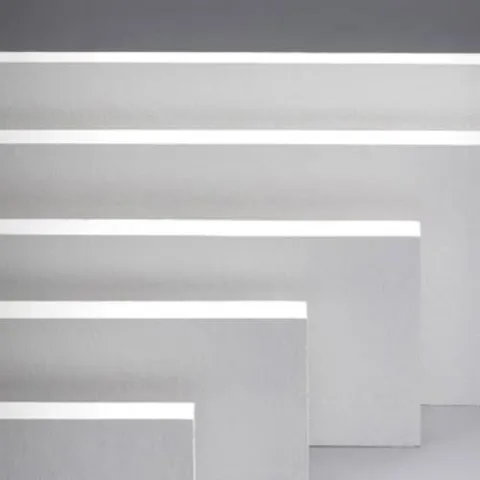
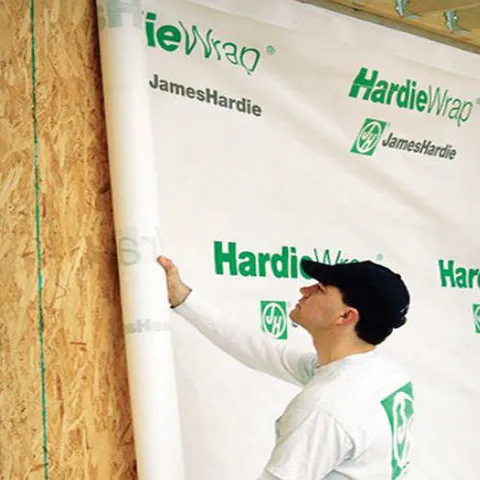
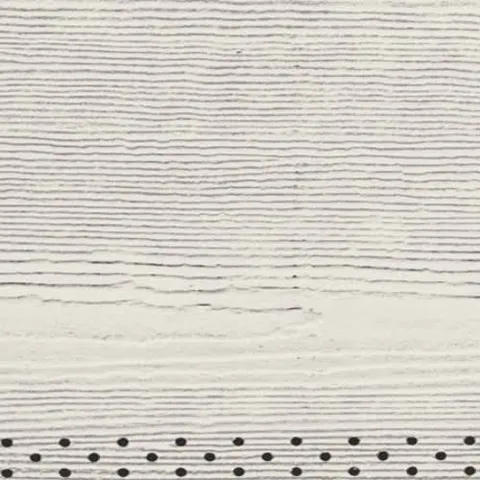
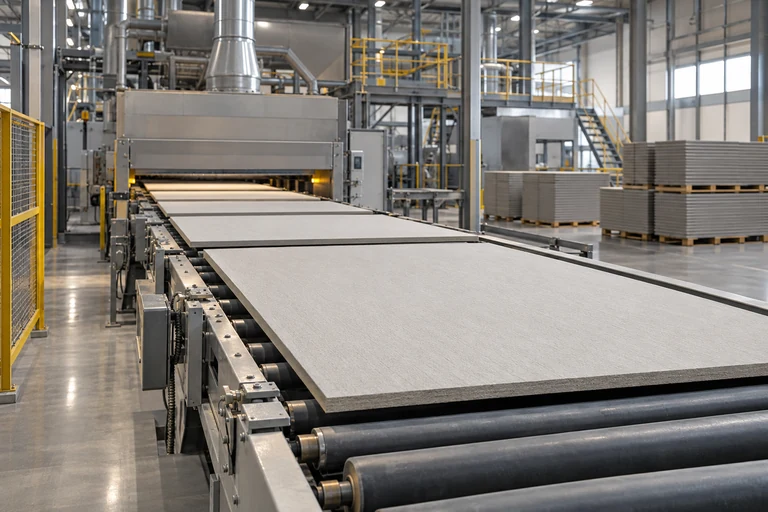
Illustrative production study, not a photograph of the maker's own facility.
Asked at the desk
Questions, answered plainly
Is James Hardie siding fireproof?
Per James Hardie, "Hardie® siding is noncombustible—it will not burn," and it complies with ASTM E136 as a noncombustible cladding. The company adds a caveat worth quoting: fiber cement fire resistance does not extend to applied paints or coatings, which may be damaged or char when exposed to flames. Noncombustible describes the material, not a rated assembly — fire ratings remain a local-code matter.
What is the difference between Hardie HZ5 and HZ10 siding?
Both are Hardie® fiber cement; the formulation differs by climate. Per James Hardie, the HardieZone® system maps eight climatic variables into ten zones: HZ5® boards serve zones 1–5 — freezing temperatures, seasonal swings, snow and ice — and HZ5 lap siding adds a drip edge for water management. HZ10® boards serve zones 6–10, engineered for heat, humidity, and coastal conditions. The company publishes a zone lookup by state and ZIP code.
How much of an 8.25-inch HardiePlank shows after installation?
Seven inches per course. James Hardie's installation instructions require a minimum 1-1/4-inch overlap between courses for both face and blind nailing, so exposure equals nominal width minus 1.25 inches — 8.25 minus 1.25 is 7. Estimate siding quantities from exposure, not plank width, and account for the 1-1/4-inch starter strip that kicks out the first course.
Do I need a special blade to cut Hardie board?
Cutting method matters more than the blade alone: fiber cement dust contains respirable crystalline silica. James Hardie ranks score-and-snap and fiber cement shears as "Best," a dust-reducing circular saw with a HardieBlade® saw blade and HEPA vacuum extraction as "Better," and the saw and blade alone — for low to moderate cutting only — as "Good." The instructions say never to use a circular blade without the HardieBlade trademark, never to run a power saw indoors, and never to dry sweep. An N-95 respirator adds protection.
What warranty comes with James Hardie siding?
Hardie® lap and panel siding carry a 30-year non-prorated, limited, transferable substrate warranty, per the brand's product pages. ColorPlus® factory finishes add a 15-year prorated limited warranty covering paint and labor against peeling, cracking, and chipping. Primed boards are field-painted, so the coating falls outside James Hardie's finish warranty — any paint coverage comes from the paint product, not the siding maker. Terms and registration live at jameshardie.com.
What is HardieBacker board used for?
HardieBacker® is fiber cement backer board — the substrate under tile on floors, walls, and counters in kitchens and baths. James Hardie describes it as the most preferred brand of cement backer board among tile installers, citing a 2021 Clear Seas Research study with the NTCA and TILE Magazine, and says it has been chosen in over 40 million kitchens and bathrooms. It comes in 1/4-inch and 0.42-inch thicknesses with an EZ Grid® fastener pattern and MoldBlock® Technology.
The hall closes. The cladding holds its line.
The James Hardie lines above are live catalog — priced in the open, the same number for everyone. Siding is a coverage buy: send the wall measurements — however you have them — and a human specialist prices every line and checks the math.
Sources: James Hardie corporate history (jameshardie.com.au); jameshardie.com product, HardieZone®, and silica-safety pages; HardiePlank® installation instructions; HardieZone® care and maintenance guides; James Hardie press releases and SEC filings; Freedonia Group and Clear Seas Research as cited by James Hardie; retailer product listings. Era and anatomy imagery: styled visualizations, not archival photographs or James Hardie drawings.
HardiePlank®, HardiePanel®, HardieTrim®, HardieBacker®, HardieZone®, HZ5®, HZ10®, ColorPlus®, HardieBlade®, EZ Grid®, MoldBlock®, Select Cedarmill®, and Engineered for Climate® are trademarks or registered trademarks of James Hardie Technology Ltd. Super Arbor is an independent retailer; brand marks remain the property of their respective owners.